Most business name generators work like a slot machine. You put in a keyword, pull the lever, and fifty names fall out: the keyword with a suffix, the keyword with a prefix, two industry words fused together. Then you check the domains and discover that the three you liked were registered years ago.
We rebuilt our business name generator so it works the way naming actually works: as a conversation. You describe the business, an assistant asks what the name should lean into and what it should avoid, and every name it suggests is checked live for domain availability before you see it.
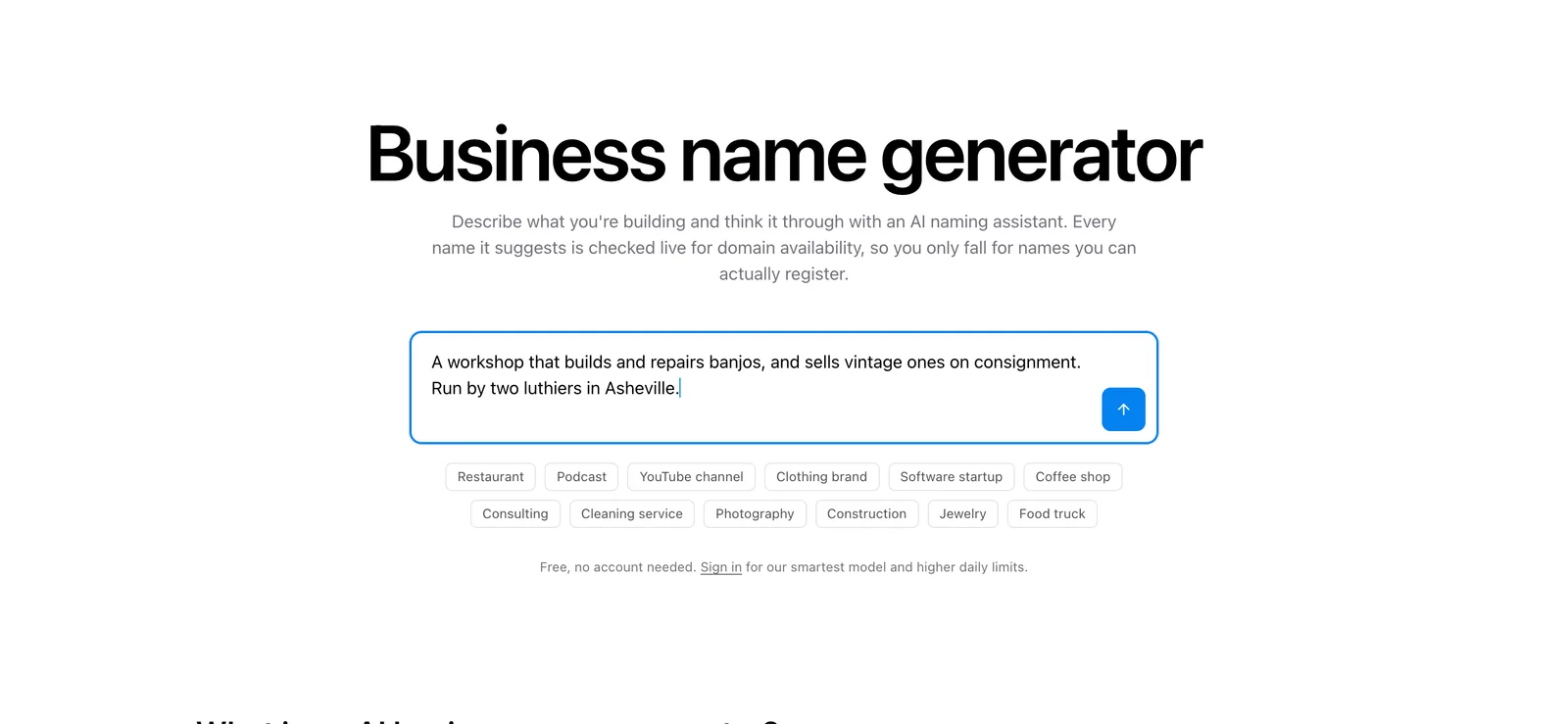
Describe it, then talk it through
The input is a sentence or two about the business: what it does, who it’s for, what makes it different. That’s the whole brief. There are no dropdowns for industry or tone, because the assistant reads those from what you wrote, and because the most useful information about a banjo workshop is not “music retail” but “run by two luthiers”.
If you’re not sure where to start, the chips under the box hold a fill-in-the-blanks brief for a dozen common businesses: restaurant, podcast, YouTube channel, clothing brand, software startup, coffee shop, and so on. Pick one, replace the blanks, and go.
Two questions before any names
The assistant reacts to what you told it in a line, then asks one question: which way should the name lean? The options come from your business, not from a stock list. For the banjo workshop they were the craft, the shop as a place players gather, old-time and vintage, or plain and modern. You can pick more than one.
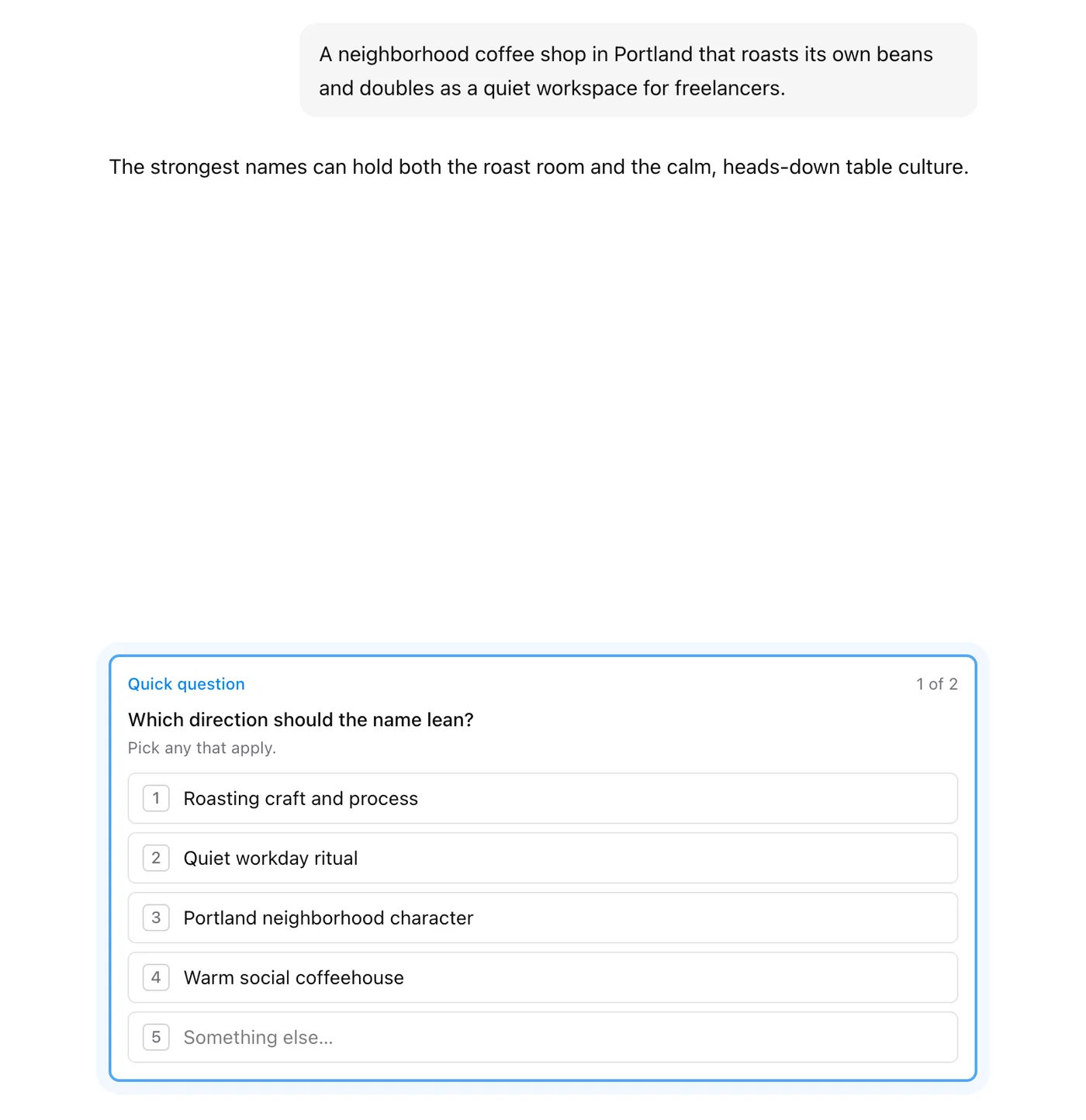
The second question is what the name should avoid. It’s usually the more useful answer, and the easier one to give: folksy mountain clichés, generic repair-shop language, startup jargon. Then the first batch arrives.
Every name is checked live
Six to ten names at a time, and each one goes through a live registry check before it reaches you. A green dot means the domain is free to register at the standard price. Amber means it’s available but premium-priced. Red means it’s taken, and the name stays in the list, struck through, rather than quietly disappearing.
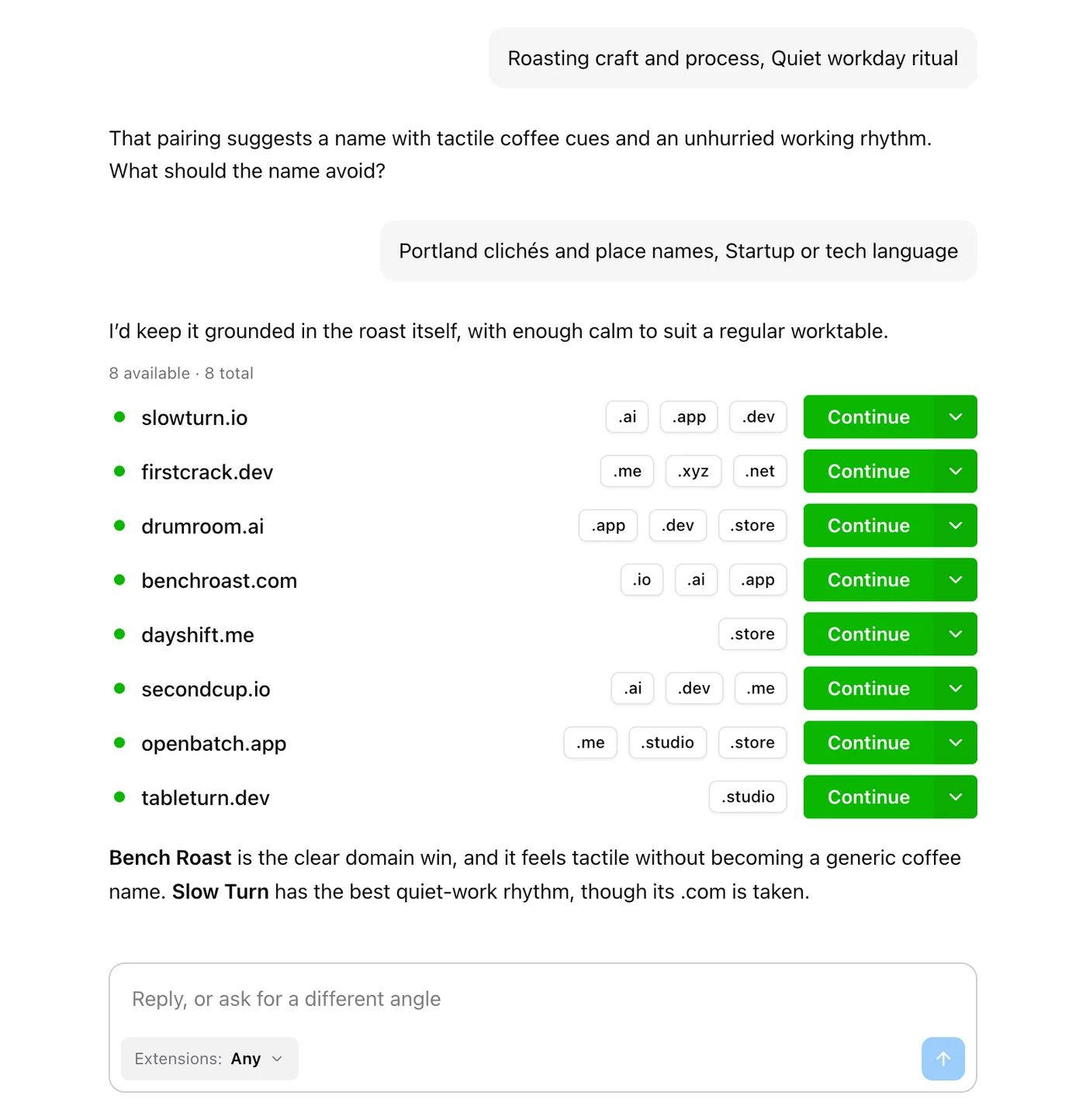
Each row shows the best available extension first, with a few alternates beside it, and a Continue button that takes you to your choice of registrar. There’s an extensions control next to the message box if you only want .com, or only .io and .ai, and you can also just say so in the conversation.
After the batch, the assistant says which one or two it would back and why, then asks what’s landing. Your reaction to real names tells it more than any abstract answer would, so the next batch moves in the direction you point.
When nothing is available, it says so
Ask for names built from familiar workspace words and you’ll find out fast that the .coms went years ago. The assistant reports what the check returns. When a batch comes back with nothing to register, it says so, and suggests a different angle instead of pretending.
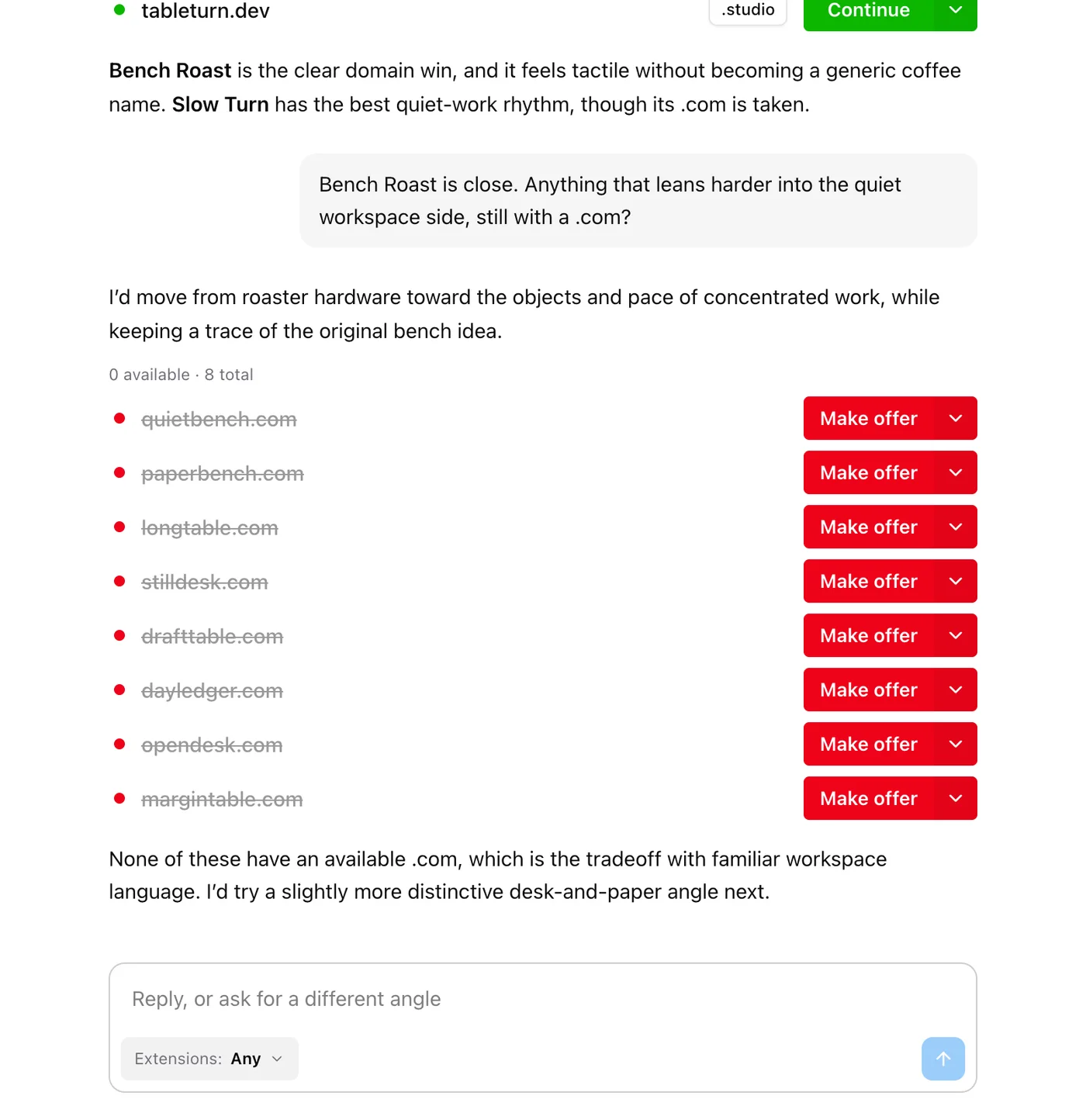
Taken names are still worth seeing. Sometimes the right name is worth an offer on the aftermarket, and the Make offer button on each row goes straight there.
What it’s looking for
The brief we give the assistant is short, and most of it is about taste. The target is an ordinary word used unexpectedly: familiar enough to read, say, and spell with no effort, and unexpected enough not to be a description.
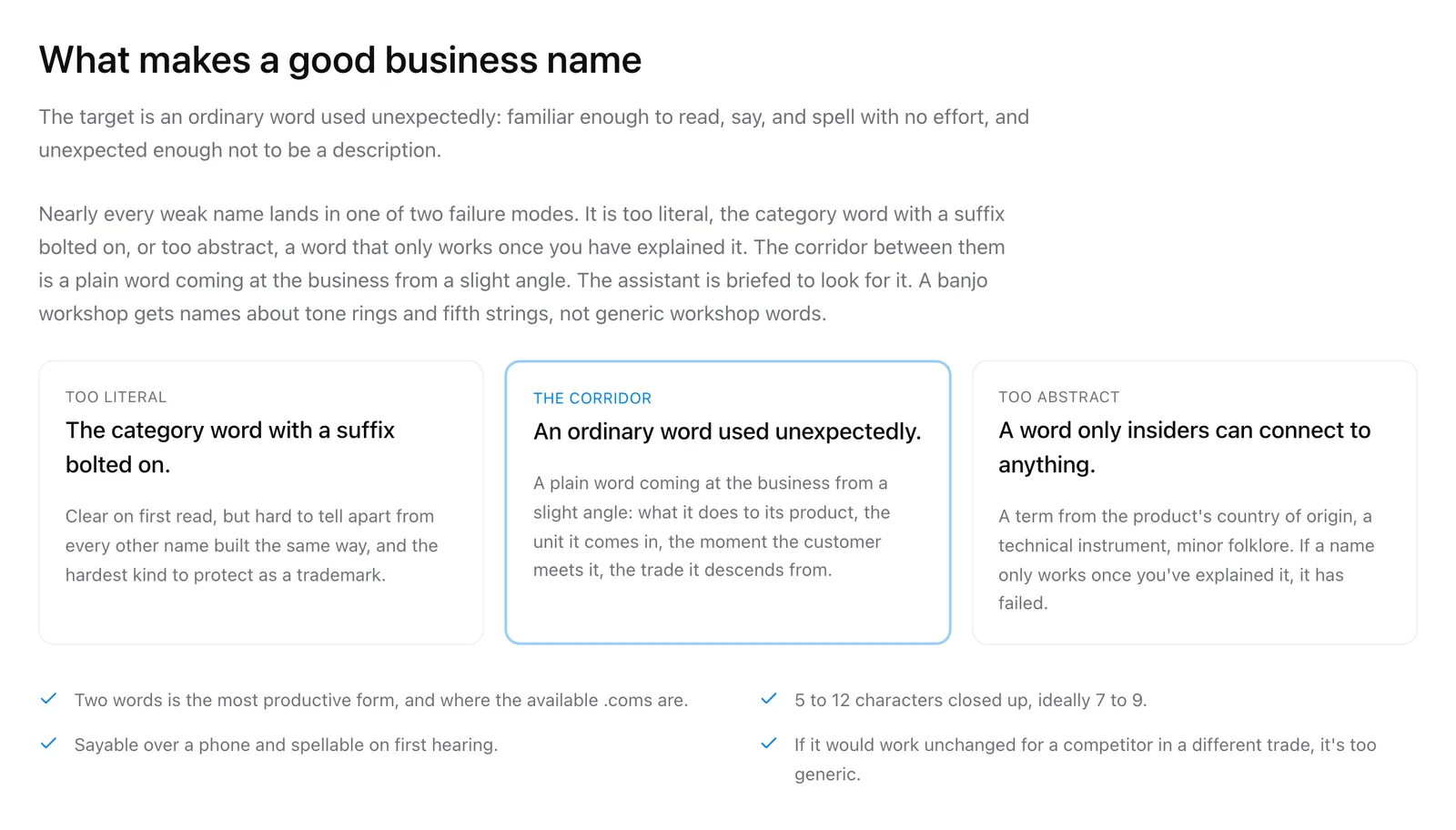
Nearly every weak name lands in one of two failure modes. Too literal is the category word with a suffix bolted on: clear, forgettable, and identical to every name built the same way. Too abstract is a word only insiders can connect to anything: if it only works once you’ve explained it, it has failed. The corridor between them is a plain word coming at the business from a slight angle. For a banjo shop that’s the part that gives the instrument its voice (Tone Ring), the string every player knows (Fifth String), or the old-time shape (Open Back).
There’s a shape to it too. Two words is the most productive form, and where the available .coms are. Five to twelve characters closed up. Sayable over a phone and spellable on first hearing. And if a name would work unchanged for a competitor in a different trade, it’s too generic to show.
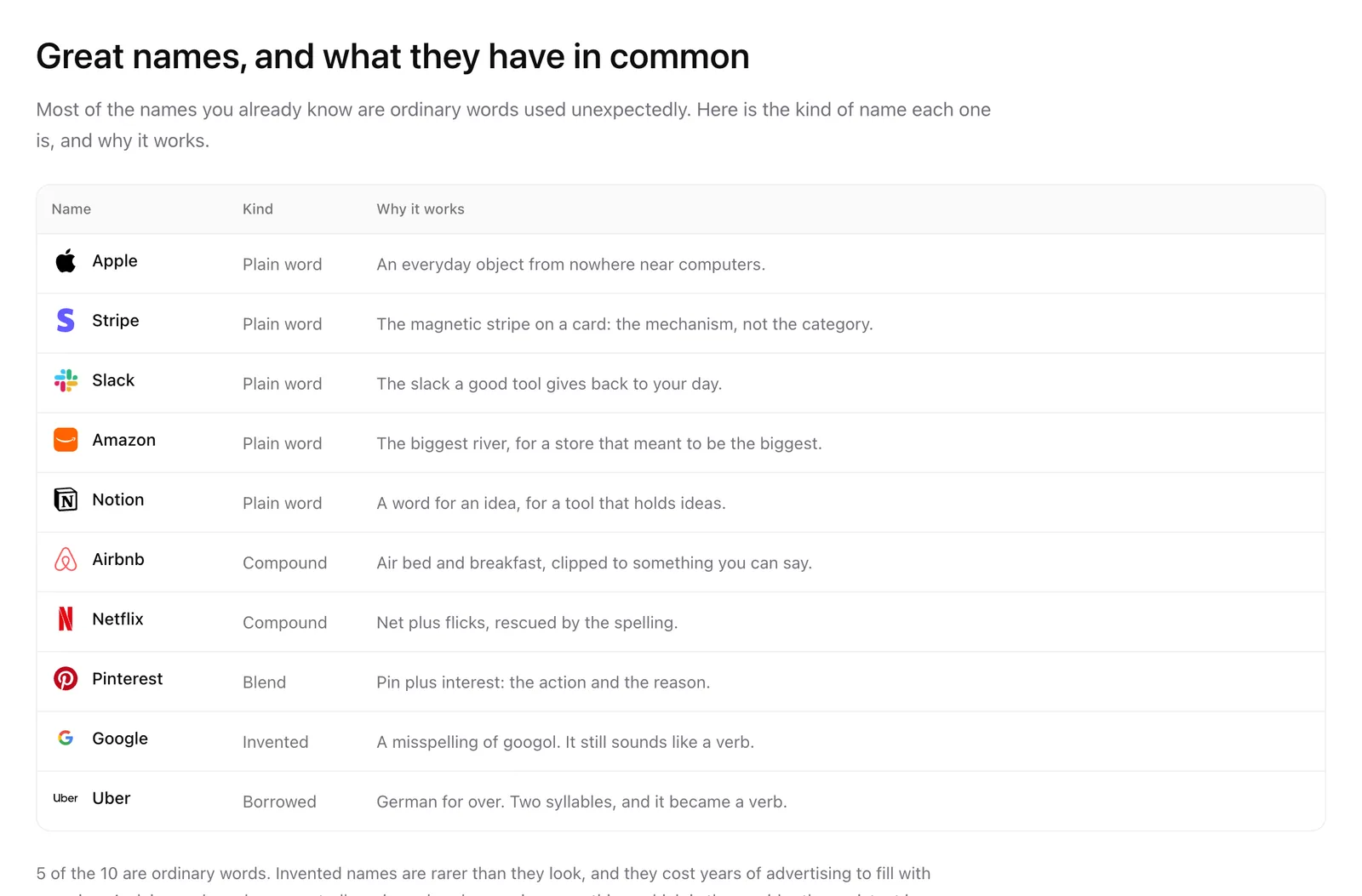
The names you already know back this up. Apple, Stripe, Slack, Amazon, Notion: ordinary words, each coming at the business from an angle. Invented names like Google are rarer than they look, and they cost years of advertising to fill with meaning. The page now has a table of ten well-known names with the kind of name each one is, and why it works.
From a name to a launch
A name is only yours when the domain is available, the trademark is clear, and the handles are open. The generator handles the first part. For the rest, run the name through our free trademark search to see live, pending, and dead US marks, open it in the domain checker for social handles and a preview of how it looks in a search result, and compare it across 800+ domain extensions if the .com is gone. If you only have a feeling for the name and not the word yet, the reverse dictionary is the place to start.
Try it
The naming assistant is live and free at instantdomainsearch.com/business-name-generator. There’s no account to create. Signing in, which is also free, unlocks our smartest model and higher daily limits, and keeps your saved names across devices.
Describe what you’re building. It will ask the right questions, and every name it shows you will be one you can actually register.
Frequently asked questions
Is the business name generator free?
Yes. There is nothing to pay and no account to create. Signing in unlocks our smartest model and higher daily limits. We earn a small referral fee when you register a domain through one of our registrar links, and the price you pay is the same as going to the registrar directly.
How is it different from asking ChatGPT for names?
A general chatbot can’t check the registry, so its names are guesses and the .com is usually gone. The naming assistant runs a live availability check on every name, shows taken names honestly, and links each available one to a registrar. It’s also briefed on what makes a name work, and it asks before it suggests.
Which extensions does it check?
By default .com, .io, .ai, .app, .dev, .me, .studio, .store, .xyz, .net, and .org. The extensions control next to the message box narrows a check to any of the extensions the registry check can verify, and you can ask for an extension in your own words. For the full picture on any name, open it in domain search to see 800+ extensions at once.