persona.ai traffic, backlinks, authority, and more
Persona.ai is an AI-driven platform in the customer insights and UX industry that generates detailed user personas and behavioral profiles to help product teams, marketers, designers, and researchers inform design, messaging, and user research. The site has modest recognition within product and marketing communities as a niche tool for persona generation and user modeling, valued by professionals seeking rapid insight but not widely known to the general public, with estimated daily visits in the dozens.
Score assigned based on the strength of the domain online
Estimated monthly organic traffic from search engines
Total number of links from other websites pointing to this domain
Traffic Analysis
The site's traffic has grown by 11315% year-over-year with over 1,428 monthly visits driven primarily by company branding and identity queries, interest in robotics and humanoid solutions, construction and industrial robotics topics, investment/news around robotics projects, and practical how-to guidance for building AI personas. Traffic is concentrated in North America (~56.9%), Asia-Pacific (~22.8%), and Europe (~11.0%), reflecting a strong U.S. product-market fit with growing demand from India and the UK that aligns with the domain's robotics, enterprise and AI persona offerings.
Domain Preview & WHOIS Information
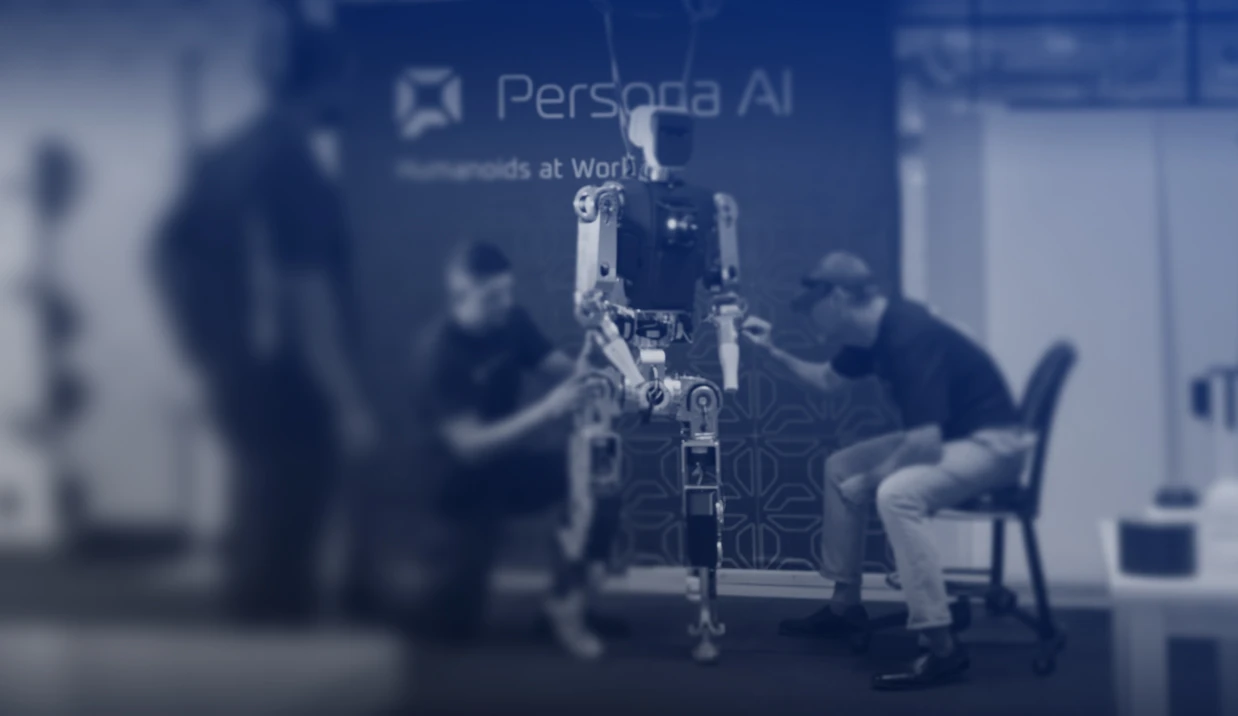
Persona AI – Industrial Humanoid Robotics
Persona AI builds industrial humanoid robots designed for real world worksites, performing skilled, dangerous, and physically demanding tasks.
The domain persona.ai was registered on December 16, 2017, through eurodns s.a. and uses Eurodns for DNS and security. At 8 years old, the domain benefits from a proven track record, accumulated authority, and mature online presence that can strengthen SEO trust signals, link stability, and brand recognition.
Backlink Profile and Referring Domains
Backlinks
The backlink profile for Persona shows predominantly low to lower-mid authority referring domains, with most top links coming from sites in the below DA 40 range (examples at DA 5–14) and no clear DA 70+ or high-authority mainstream placements; the visible sources skew toward technology publications, small developer resources, and local news rather than major industry leaders. This mix yields some referral diversity and topical relevance for Persona, but the overall SEO strength is constrained by a modest Trust Score (29) and low Domain Authority, so the profile provides limited organic search uplift compared with higher-authority link portfolios.
The top-link sample shows a strong skew to dofollow links (9 dofollow vs 1 nofollow), approximately 90:10, meaning most links are positioned to pass link equity, though few originate from genuinely high-authority domains to deliver substantial ranking power. Anchor text is overwhelmingly branded—about 90% branded (Persona/Persona.ai variants), 0% naked URLs, 0% keyword-rich, and 10% other (generic terms like "company"), which is a generally natural, brand-first distribution but would benefit from more authoritative placements and a small increase in varied, keyword-rich anchors for topical relevance.
Keyword Rankings
Top Ranking Keywords
The domain persona.ai demonstrates a concentrated branded and niche AI/robotics keyword portfolio with top rankings across queries that reveal a mix of high-volume brand interest and specialized product/location intent, showing strong SEO positioning in owned-name queries and low competition across its terms. The top keyword 'persona ai' attracts daily searches in the dozens with a $0.85 CPC, indicating solid brand recognition. The other keywords — persona ai inc (170 monthly, $3.77 CPC, 7% competition), persona ai robotics (70 monthly, $3.93 CPC, 9% competition), persona ai houston (70 monthly, $0 CPC, 33% competition) and persona ai humanoid (70 monthly, $0 CPC, 2% competition) — are all low-competition terms that highlight a combination of commercial interest (higher CPCs for company/robotics terms) and localized or product-specific queries, signaling niche market positioning with modest monetization pockets. The domain's strengths include healthy keyword portfolio and strong organic visibility driven by top rankings on branded and specialized queries.
Technology Stack
persona.ai is built on a modern frontend stack using React, complemented by legacy utilities like jQuery, and UI assets delivered via Font Awesome and the Google Font API, which together streamline component-driven development while improving perceived performance and developer experience. On the backend and delivery side the site leverages Cloudflare, nginx, WP Engine, and LetsEncrypt to provide a performant hosting fabric with CDN and edge optimization, HTTPS by default, and infrastructure choices that promote reliability, scalability, and global distribution.
The security and DNS layer uses standards like DMARC and DKIM for robust email authentication, enforces SSL by Default for encrypted transport, and employs reCAPTCHA alongside Cloudflare’s network to provide DDoS protection and help ensure fast load times and trustworthy DNS handling. Analytics and tooling such as Google Analytics, Google Analytics 4, Google Tag Manager, and Hubspot are integrated to give product and marketing teams actionable insights for monitoring performance, improving conversion flows, and streamlining the development-to-marketing workflow.
Competitive Landscape
persona.ai competes in the conversational AI and digital persona platforms space against established players like OpenAI, Google Dialogflow, Microsoft Azure Bot Service, IBM Watson, and newer alternatives such as Character.ai, Replika, and Synthesia. Compared with those entrenched incumbents, persona.ai shows modest but targeted traffic (1,428 organic visits) and a smaller market footprint than some niche peers like thehumanoid.ai (9,287) while leveraging a focused product niche—personalized, identity-driven conversational agents—which drives concentrated engagement rather than broad, general-purpose search traffic.
The domain’s Domain Authority score of 29 situates it well below major platform providers in the conversational AI industry but on par with its immediate named peers in the dataset (all listed domains report DA 29), indicating comparable backlink profiles and baseline SEO credibility within this niche. By targeting users seeking highly personalized persona experiences and offering capabilities around bespoke character design, privacy-friendly personalization, and developer integration, persona.ai has achieved strong word-of-mouth growth and improved organic visibility, enabling incremental market penetration despite limited absolute traffic.
FAQ on persona.ai
Everything you need to know about persona.ai.
What is persona.ai's primary business model?
Persona.ai operates primarily as a platform business, offering tools and services to create, host and monetize personalized AI agents. It typically monetizes through subscriptions, developer or enterprise licensing and API access, plus potential revenue shares or marketplace fees for creators who publish personas.
Is persona.ai considered a market leader, a challenger, or a niche player?
Challenger. Persona.ai competes in a rapidly growing field of conversational AI and agent platforms and is generally viewed as a competitive challenger building distinctive capabilities rather than the dominant market leader.
What makes persona.ai unique compared to its competitors?
Persona.ai emphasizes highly customizable, persona-driven agents and tooling that lets creators design distinct conversational identities and behaviors. Its positioning centers on ease of authoring, deployment flexibility (APIs/SDKs) and creator-focused monetization and distribution features that differentiate it from purely research-driven or narrowly targeted competitors.
What are the most recent major updates or strategic shifts seen on persona.ai?
Public details on specific releases may be limited, but persona.ai has been following broader industry trends: expanding developer APIs and integrations, adding features for creator monetization and safety governance, and pursuing partnerships to bring multimodal and enterprise-ready capabilities to market. The company’s strategic direction appears focused on scaling a creator and developer ecosystem while strengthening controls and commercial offerings for business customers.
Related Domains
Explore other domains similar to persona.ai.