radix-ui.com traffic, backlinks, authority, and more
Radix UI is an open-source software project providing accessible, unstyled UI primitives and component building blocks for front-end development, primarily used by React developers, UI engineers, and product designers building web applications. It is well-regarded within the developer and design communities for its focus on accessibility and composability and maintains a solid niche following among its target users with estimated daily visits in the hundreds.
Score assigned based on the strength of the domain online
Estimated monthly organic traffic from search engines
Total number of links from other websites pointing to this domain
Traffic Analysis
The site's traffic has grown by 12% year-over-year with over 14,106 monthly visits driven primarily by a concentrated interest in UI component patterns, navigation and dialog behaviors, and color/token customization searches that signal strong intent from developers and designers. The audience is concentrated in North America (≈38.2%), Europe (≈35.0%) and Latin America (≈15.2%), reflecting a core US developer base with sizable European adoption and a notable Brazilian footprint that align with the domain’s focus on front-end component tooling and cross‑market design system needs.
Domain Preview & WHOIS Information
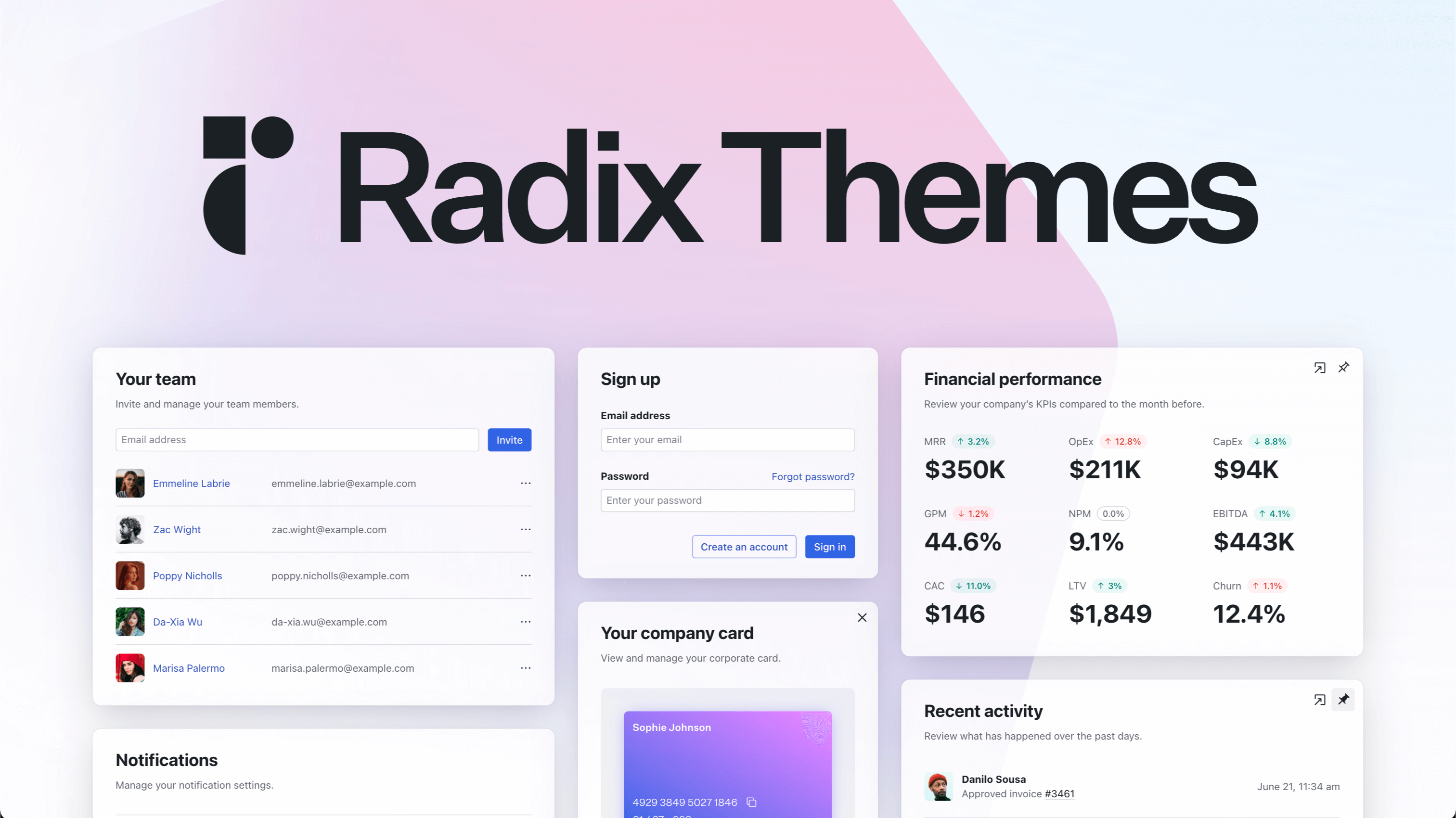
Radix UI
Components, icons, and colors for building high‑quality, accessible UI. Free and open-source.
The domain radix-ui.com was registered on August 11, 2020, through amazon registrar, inc. and uses Cloudflare for DNS and security. At 5 years old, this indicates a mature online presence with a proven track record and accumulated authority, which can translate into stronger trust signals, improved domain authority, and meaningful SEO benefits as the site continues to build backlinks and user trust.
Backlink Profile and Referring Domains
Referring Domains
Radix UI’s backlink profile shows predominantly lower-to-mid authority links with an overall domain authority clustering around DA 40-69 (notably DA 43 reported) and several referring sources in the teens; there are no DA 70+ links in the sample, and notable sources include community and developer-oriented outlets like Hacker News, Habr/Q&A, and various developer resources and personal blogs. This mix of medium-authority and lower-authority backlinks still supports organic visibility by providing topical relevance and referral traffic from technology publications and developer resources, contributing to steady SEO strength despite the absence of top-tier industry leaders links.
The sample backlink set shows a dofollow-to-nofollow split of roughly 80:20, indicating a predominance of dofollow links where those from higher-authority referring domains (within the profile) can pass meaningful link equity and help rankings. Anchor text is largely dominated by naked URLs (about 70%), with branded anchors like “Radix UI” or “Radix” around 20%, and keyword-rich or descriptive anchors about 10%, a distribution that appears largely natural and healthy but would benefit from some additional authoritative contextual/keyword-rich anchors for improved topical signals.
Keyword Rankings
Top Ranking Keywords
The domain radix-ui.com has a focused keyword portfolio centered on developer tooling and design system primitives, ranking at number one for core branded and product queries with notable search volumes like 5,400 for "radix ui" and 12,100 for "radix", showing a concentrated, high-intent footprint and clear SEO positioning within UI components and accessibility-focused tooling. The top keyword 'radix ui' attracts daily searches in the hundreds with a $3.2 CPC, indicating solid brand recognition. The other keywords—"radix" (12,100, 0% competition), "redix ui" (320, 2%), "radix colors" (260, 0%) and "radix ui react tooltip" (170, 1%)—are all low-competition (0-2%) terms that point to a niche technical audience and low paid-search pressure, revealing a market positioning that is authoritative among developers but not broadly commercialized. Overall the domain demonstrates strong organic visibility, healthy keyword portfolio, and competitive SEO performance.
Competitive Landscape
radix-ui.com competes in the UI component library and design systems space against established players like Material UI, Ant Design, and Chakra UI, and newer alternatives such as shadcn.com, base-ui.com, radix-vue.com, and ariakit.org. Compared to those more established players, radix-ui.com shows a focused market presence with mid-level traffic (about 14k organic visits) and a specialization in low-level, accessible primitives that drives adoption in developer tooling and design-system stacks, giving it a developer-first, accessibility-focused niche that supports steady organic growth despite lower brand reach than giants.
The site carries a Domain Authority score of 43, which places it on par with the direct competitors listed (all tied at similar DA in the provided data) and solid for the UI component library industry even if it trails mass-market frameworks in absolute visibility. By targeting frontend engineers and design-system maintainers with accessible primitives, composability, and TypeScript-friendly APIs, radix-ui.com has generated strong word-of-mouth, sustained organic visibility, and measurable market penetration within modern web-app developer communities.
FAQ on radix-ui.com
Everything you need to know about radix-ui.com.
What is radix-ui.com's primary business model?
Radix-ui.com operates primarily as an open-source project that provides free, unstyled React UI primitives focused on accessibility and composability. The project is supported through community sponsorships, contributions, and commercial partnerships or services rather than a traditional paid product storefront.
Is radix-ui.com considered a market leader, a challenger, or a niche player?
Challenger. Radix UI is widely respected and rapidly adopted within the frontend community for its accessibility-first, headless primitives, but it sits alongside larger, more opinionated UI frameworks rather than dominating the overall component library market.
What makes radix-ui.com unique compared to its competitors?
Radix UI distinguishes itself with unstyled, headless primitives that prioritize accessibility, robust keyboard and screen-reader support, and composability so teams can apply their own styling systems. Its focus on low-level building blocks rather than ready-made themed components appeals to teams building custom design systems and high-performance interfaces.
What are the most recent major updates or strategic shifts seen on radix-ui.com?
Recent activity has emphasized expanding the set of primitives, improving TypeScript and React 18/SSR compatibility, and strengthening documentation and examples to ease integration with design systems. In lieu of a single headline product pivot, the project’s strategic direction appears to center on deepening accessibility guarantees, broadening component coverage, and improving ecosystem interoperability with tools like Next.js and popular styling solutions.
Related Domains
Explore other domains similar to radix-ui.com.