bitbucket.org traffic, backlinks, authority, and more
Bitbucket.org is a web-based source code hosting and collaboration platform in the software development industry, providing Git and Mercurial repository management, code review, CI/CD integration, and project-tracking tools primarily used by software developers, engineering teams, and DevOps professionals. It is widely recognized among developers and tech organizations as a reliable Atlassian-hosted tool for team-based code collaboration and enterprise workflows, enjoying steady popularity within its target audience with estimated daily visits in the thousands.
Score assigned based on the strength of the domain online
Estimated monthly organic traffic from search engines
Total number of links from other websites pointing to this domain
Traffic Analysis
The site's traffic has declined by 11% year-over-year with over 40,861 monthly visits driven primarily by developer-focused activity around source control and access management, transactional interest in pricing and account configuration, security-related searches and some unrelated or low-quality query traffic. Geographically the audience is concentrated in Asia-Pacific led by India (27.8%), followed by North America led by the United States (20.2%), and Europe led by Spain (4.7%), a spread that aligns with Bitbucket’s core developer and enterprise markets while highlighting strong traction in emerging developer communities in Asia.
Domain Preview & WHOIS Information
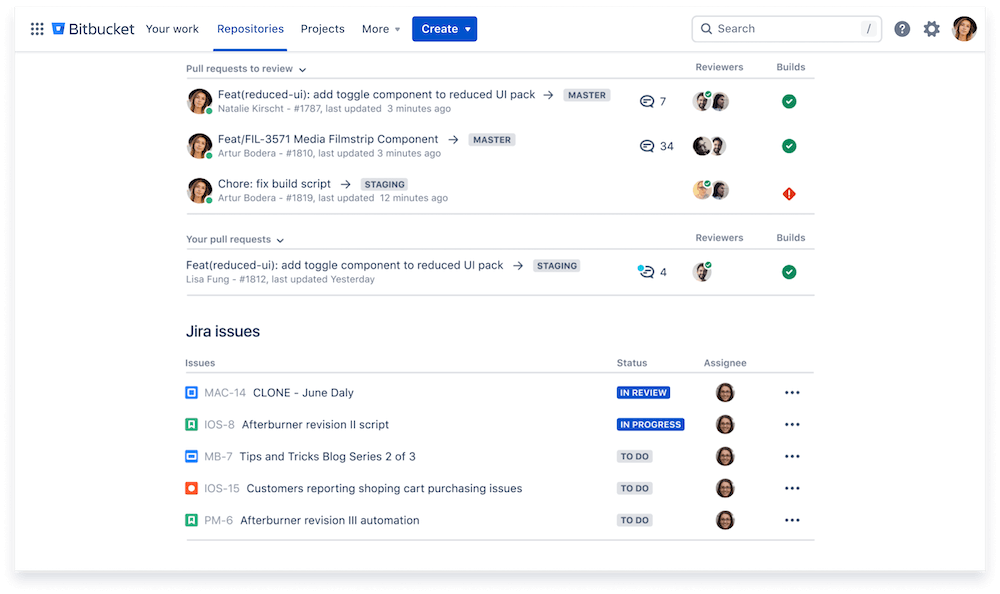
Bitbucket | Git solution for teams using Jira
Bitbucket Cloud is a Git-based code and CI/CD tool optimized for teams using Jira.
The domain bitbucket.org was registered on November 24, 1997, through markmonitor inc. and uses AWS for DNS and security. At 28 years old, the domain benefits from established credibility, accumulated authority, and a proven track record, signaling strong domain authority, trust signals, and sustained SEO advantages that support an established online presence.
Backlink Profile and Referring Domains
Backlinks
Referring Domains
Bitbucket’s backlink profile is dominated by medium-authority (DA 40-69) referring domains with an overall domain-level authority of DA 76, and includes links from recognized developer resources, technology publications, and industry leaders (e.g., Atlassian documentation and developer repositories) indicating a generally high-quality and topical link set. This mix of authoritative topical links and broad referring-domain count supports Bitbucket’s organic visibility by providing relevant topical signals, trust, and referral traffic that strengthen its overall SEO strength.
The sampled top links show a dofollow-to-nofollow split of approximately 30:70, a nofollow-leaning distribution where the available dofollow links from higher-DA sources pass meaningful link equity while the larger nofollow share contributes referral and trust signals without direct PageRank flow. Anchor text is varied with roughly 40% branded, 50% naked URLs, 0% keyword-rich, and 10% other/long descriptive anchors, a generally natural distribution that avoids over-optimization but could benefit from a small, cautious increase in relevant keyword-rich anchors to reinforce target keyword signals.
Keyword Rankings
Top Ranking Keywords
The domain bitbucket.org targets a compact, brand-focused keyword set that includes high-volume account access queries, a large non-English term and misspellings, and product comparison intent, showing a concentrated SEO profile with high monthly volumes like 8,100 and 1,900 and generally very low competition across the portfolio. The top keyword 'bitbucket login' attracts daily searches in the dozens with a $0 CPC, indicating solid brand recognition. The other four keywords—司机社 (8,100, $0 CPC, 0% competition), big bucket login (1,000, $0 CPC, 0% competition), bitbu (1,000, $5.05 CPC, 1% competition) and bitbucket vs github (1,000, $1.61 CPC, 1% competition)—are all low-competition terms that reveal mix of international traffic, spelling variants and comparison research, positioning the site as a recognized platform with limited paid intent and minimal bidding pressure. The domain shows strong organic visibility and a healthy keyword portfolio with competitive SEO performance.
Competitive Landscape
bitbucket.org competes in the source code hosting and developer collaboration space against established players like GitHub, GitLab, Azure DevOps and newer alternatives such as SourceTree and Gitea. Compared with the largest incumbents, bitbucket.org shows moderate direct organic traffic (about 40.9k) but leverages its Atlassian integration and team-oriented feature set to capture a niche of enterprise and team workflows, producing steadier, enterprise-driven traffic patterns versus the broader consumer and open-source pulls of competitors.
The site carries a Domain Authority score of 58 which, within the source code hosting and developer collaboration industry, sits in parity with the peer set presented and indicates comparable backlink strength even where raw traffic varies. By targeting enterprise teams with Atlassian integration, team-focused workflows, and built-in CI/CD, bitbucket.org has driven organic visibility and improved market penetration, translating its technical feature strengths into sustained adoption among professional development teams.
FAQ on bitbucket.org
Everything you need to know about bitbucket.org.
What is bitbucket.org's primary business model?
Bitbucket.org, operated by Atlassian, primarily operates a SaaS subscription and tiered pricing business model for source code hosting, developer tools, and collaboration features. It offers free and paid plans for teams with additional features like increased build minutes, repository size, and advanced access controls, while also generating revenue through enterprise offerings and integrations in the Atlassian ecosystem.
Is bitbucket.org considered a market leader, a challenger, or a niche player?
Bitbucket.org is best categorized as a challenger in the code hosting and developer tools market. While it has a significant user base and strong integration within Atlassian's suite, it competes with larger market leaders such as GitHub and GitLab.
What makes bitbucket.org unique compared to its competitors?
Bitbucket's tight integration with Atlassian products like Jira, Confluence, and Bamboo distinguishes it for teams already invested in that ecosystem, enabling seamless issue tracking and development workflows. It also offers native CI/CD with Bitbucket Pipelines, built-in code review and pull request features, and flexible deployment options across cloud and data center environments.
What are the most recent major updates or strategic shifts seen on bitbucket.org?
Recent strategic shifts have focused on strengthening Bitbucket Cloud and Bitbucket Pipelines, improving code insights, security features, and developer experience while encouraging migrations away from legacy server offerings. Atlassian has also continued to streamline integrations with Jira and prioritize cloud-native capabilities, following broader market trends toward SaaS, consolidated toolchains, and tighter security and CI/CD workflows.
Related Domains
Explore other domains similar to bitbucket.org.