brain.fm traffic, backlinks, authority, and more
Brain.fm is a neurotechnology and audio wellness company that creates AI-driven functional music and soundscapes designed to improve focus, relaxation, and sleep for users such as students, remote workers, creatives, and people seeking cognitive enhancement or better rest. The site is relatively well-known within productivity, wellness, and biohacking communities and attracts a niche but engaged user base among both consumers and professionals, with estimated daily visits in the hundreds.
Score assigned based on the strength of the domain online
Estimated monthly organic traffic from search engines
Total number of links from other websites pointing to this domain
Traffic Analysis
The site's traffic has grown by 47% year-over-year with over 21,569 monthly visits driven primarily by strong search demand for focus and study-oriented audio, relaxation and sleep formats, and brainwave/entrainment-based tracks that target productivity and attention use cases. Traffic is concentrated in North America (~44% of visits, led by the US), Europe (~31%), and Latin America (~14%), reflecting a strong foothold in English-speaking and Western markets while also signaling meaningful adoption in Latin American audiences that can inform regional marketing and localization strategies.
Domain Preview & WHOIS Information
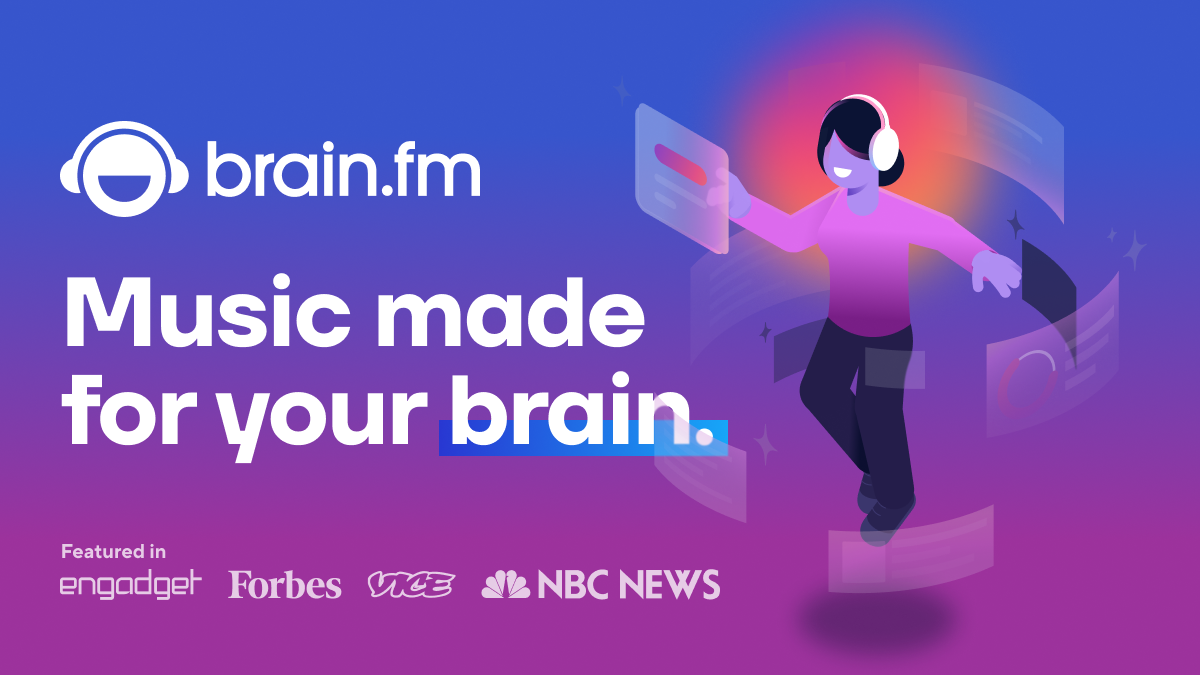
Music to Focus Better - Brain.fm
Use Brain.fm's functional music to help you focus relax and sleep better, using cutting edge neuroscience to get results.
The domain brain.fm was registered on December 2, 2014, through gandi sas and uses Cloudflare for DNS and security. At 11 years old, this age signals established credibility and a mature online presence, indicating a proven track record and accumulated authority that can strengthen trust signals and long-term SEO benefits.
Backlink Profile and Referring Domains
Referring Domains
The backlink profile for Brain.fm is dominated by DA 40-69 (medium-authority) referring domains with virtually no DA 70+ (high-authority) placements in the sample, with notable citations coming from technology publications (e.g., Wirecutter), developer resources (e.g., GitHub), and other niche review sites and blogs that provide credible topical relevance. This mix of mostly medium-authority and some lower-authority links supports steady organic visibility by reinforcing topical signals and referral traffic, contributing to Brain.fm’s overall SEO strength and trust metrics despite the absence of very high-authority link sources.
The sampled links show an approximately 50:50 dofollow-to-nofollow ratio (5 dofollow vs. 5 nofollow), a balanced distribution where the dofollow links from mid-tier publications still pass meaningful link equity and help with ranking signals. Anchor text is heavily skewed toward branded (≈80%), with naked URLs (≈10%) and other (≈10%) (e.g., combined mentions like “CEO, Brain.fm”), a distribution that appears natural and healthy for Brain.fm’s profile but would benefit from a small increase in descriptive keyword-rich anchors for diversified relevance.
Keyword Rankings
Top Ranking Keywords
The domain brain.fm demonstrates a focused keyword portfolio centered on brand and service intent with high-ranking coverage of core queries, pricing and free-trial interest plus common misspellings, indicating concentrated topical relevance and favorable SERP positioning. The top keyword 'brain fm' attracts daily searches in the hundreds with a $9.86 CPC, indicating strong commercial value. The other keywords — brain.fm pricing (volume 390, $3.73 CPC, competition 10%), bain fm (volume 260, $6.31 CPC, competition 25%), brain fm free (volume 260, $2.39 CPC, competition 10%) and brainf (volume 1,300, $2.43 CPC, competition 0%) — are all low-competition terms that reveal a market positioning focused on branded demand, transactional intent and effective capture of misspelled traffic. Overall the domain shows strong organic visibility with a healthy keyword portfolio and competitive SEO performance.
Competitive Landscape
brain.fm competes in the digital wellness and functional music space against established players like Calm, Headspace, Spotify, and newer alternatives such as Endel and Noisli. Compared to those larger platforms, brain.fm shows a concentrated niche presence with modest but focused organic traffic (21,569) and repeat engagement driven by its science-backed, AI-generated audio approach, allowing it to carve out visibility despite not matching the broad market reach or traffic volumes of the incumbents.
With a Domain Authority score of 46, brain.fm sits on par with the immediate competitive set in the digital wellness and functional music industry (the provided competitors all share the same DA), though it remains below household-name brands that typically register higher authority and traffic. By targeting productivity- and focus-oriented users with AI-driven, neuroscience-informed audio and a subscription model, brain.fm has driven strong word-of-mouth, specialty organic visibility, and steady niche market penetration.
FAQ on brain.fm
Everything you need to know about brain.fm.
What is brain.fm's primary business model?
brain.fm operates primarily as a subscription-based direct-to-consumer digital product, offering access to its functional music and soundscapes via mobile apps and a web platform. Revenue is driven by recurring consumer subscriptions, with occasional one-time purchases and some enterprise or licensing conversations reported for wider deployments.
Is brain.fm considered a market leader, a challenger, or a niche player?
brain.fm is best categorized as a niche player. It focuses specifically on AI-driven, function-oriented audio for focus, relaxation, and sleep rather than competing broadly across mainstream streaming or general wellness markets.
What makes brain.fm unique compared to its competitors?
brain.fm emphasizes algorithmically generated audio designed to elicit specific cognitive states, coupled with internal and external research efforts to validate effectiveness. The product differentiates through patented audio-generation approaches, a singular focus on measurable functional outcomes, and a simple consumer app experience tailored to distinct use cases like focus or sleep.
What are the most recent major updates or strategic shifts seen on brain.fm?
Publicly available specifics on very recent product changes are limited, but the company has been following a strategic direction of improving personalization, expanding platform support, and deepening research collaborations to strengthen efficacy claims. Expect iterative app feature updates, more content variants for different user needs, and ongoing efforts to translate research into product improvements and potential B2B opportunities.
Related Domains
Explore other domains similar to brain.fm.