bump.sh traffic, backlinks, authority, and more
bump.sh is a lightweight web service in the developer tools and productivity industry that automates version bumps, changelog updates, and release tagging for software projects, primarily used by software engineers, DevOps teams, and open-source maintainers. It has modest recognition within developer communities and among small engineering teams but remains relatively niche outside that audience, with estimated daily visits in the dozens.
Score assigned based on the strength of the domain online
Estimated monthly organic traffic from search engines
Total number of links from other websites pointing to this domain
Traffic Analysis
The site's traffic has grown by 15% year-over-year with over 1,515 monthly visits driven primarily by interest in API and developer documentation tools, JSON path/query utilities, API contract and diagram examples, and related API integration/search utilities. Geographically the audience is concentrated in North America (led by the US at 39.1%), South Asia (primarily India at 20.9%) and Eastern Europe (Russia at 7.7%), indicating strong traction in key developer and enterprise markets where API design, documentation and tooling are core purchasing and adoption areas.
Domain Preview & WHOIS Information
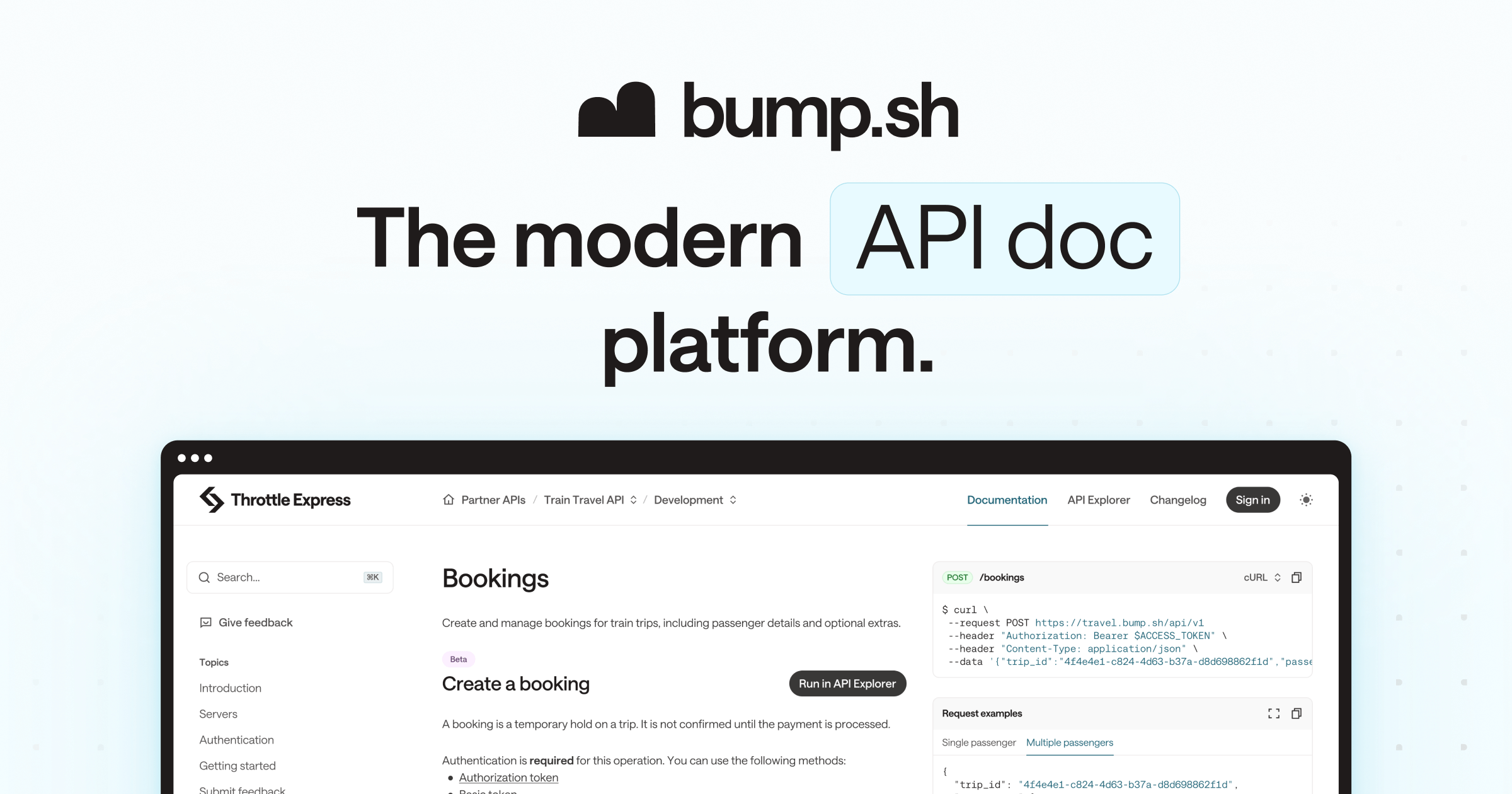
The modern API doc platform · Bump.sh
From API contract to documentation portal: streamline your workflow and deliver the best API experience. Built for engineers and tech writers.
The domain bump.sh was registered on August 8, 2017, through 1api gmbh and uses Cloudflare for DNS and security. At 8 years old, the domain benefits from a proven track record and accumulated authority, signaling established credibility and a mature online presence that can strengthen trust signals and SEO performance.
Backlink Profile and Referring Domains
Backlinks
Referring Domains
The backlink profile for Bump is dominated by lower-authority sources (most top links are below DA 40 (lower-authority)) with a handful of placements in the DA 40-69 (medium-authority) band and no visible DA 70+ anchors; notable placements come from developer resources, technology publications, and a few industry leaders (for example GitHub entries, DEV Community and Kima Ventures). While the absolute number of backlinks and referring domains is healthy, the prevalence of lower-DA links means the profile provides relevance and referral traffic more than strong raw domain authority uplift, so SEO strength is moderate rather than authoritative without more high-DA placements.
The sample shows a dofollow-to-nofollow distribution of approximately 30:70, indicating a mostly nofollow-weighted profile, though the limited dofollow links from the stronger sources (e.g., Kima Ventures, GitHub/OSS projects) will still pass meaningful link equity. Anchor text is skewed toward branded and naked forms — roughly 60% branded, 30% naked URLs, and 10% keyword-rich anchors — which is a natural, healthy mix that minimizes over-optimization risk while suggesting opportunities to grow more high-quality keyword-contextual links.
Keyword Rankings
Top Ranking Keywords
The domain bump.sh presents a focused keyword portfolio centered on API design, diagrams, and contracts with a mix of informational and commercial intent, modest to moderate search volumes (e.g., 480, 320, 110, 110, 50) and generally low competition signaling niche technical authority. The top keyword 'api contract' attracts daily searches in the dozens with a $4.33 CPC, indicating strong commercial value. The other keywords—'api diagram' (position 2, 320 SV, $7.99 CPC, 6% competition), 'what is an api contract' (position 2, 110 SV, $0 CPC, 0% competition), 'api architecture diagram' (position 2, 110 SV, $5.43 CPC, 17% competition), and 'express openapi' (position 2, 50 SV, $0 CPC, 2% competition)—show low competition (0-33%) across technical and developer-focused queries, revealing a market positioning toward niche developer audiences with limited paid competition but meaningful informational demand. The domain’s strengths lie in its focused topical relevance and rankings across developer-intent queries, reflecting healthy keyword portfolio and competitive SEO performance.
Competitive Landscape
bump.sh competes in the API documentation and developer portal space against established players like Redocly, OpenAPIs.org, Mintlify and newer alternatives such as apisyouwonthate.com. Compared with those more established players, bump.sh shows lower absolute organic traffic but meaningful niche traction — traffic patterns indicate focused, consistent visits rather than broad volume (bump.sh: 1,515 vs OpenAPIs.org: 8,443 and Mintlify: 7,813), and a differentiated, lightweight product positioning has enabled growth among small teams and projects despite not having the same broad market presence as incumbents.
bump.sh has a Domain Authority score of 31 which sits on par with direct competitors in the API documentation industry (the dataset shows parity across peers), indicating similar baseline SEO credibility but room to outcompete on content and product hooks. By targeting developers and small product teams with developer-first simplicity, features like easy changelogs and fast setup, and an emphasis on hands-on integrability, bump.sh has driven organic visibility and word-of-mouth growth that translate into steady niche market penetration.
FAQ on bump.sh
Everything you need to know about bump.sh.
What is bump.sh's primary business model?
Bump.sh operates as a developer-focused SaaS tool that helps teams manage and publish API changelogs and version diffs, typically offered via subscription plans for teams and organizations. It integrates with source control and API specifications to automate changelog generation, with revenue likely coming from paid tiers and enterprise features such as analytics, integrations, and custom domains.
Is bump.sh considered a market leader, a challenger, or a niche player?
bump.sh is best characterized as a niche player, focusing specifically on API changelogs, version diffs, and developer-facing release notes rather than broad API management or documentation platforms. While it addresses a clear specialist need, larger competitors with broader feature sets and market adoption occupy leader and challenger positions in the API tooling space.
What makes bump.sh unique compared to its competitors?
bump.sh differentiates itself by concentrating on changelogs-as-code and automating the generation and publishing of API change notes from API specs and Git workflows, which is a more specialized focus than full documentation or API governance platforms. Its value proposition emphasizes simplicity, tight integration with developer workflows (Git/CI), and producing concise, consumer-facing change summaries rather than a broader suite of documentation or management features.
What are the most recent major updates or strategic shifts seen on bump.sh?
Publicly available specifics about very recent product updates may be limited, but bump.sh appears to be following broader market trends by improving automation around OpenAPI diffs, CI/CD integrations, and developer experience for publishing changelogs. Strategically, the service seems focused on deepening integrations with source control and API-spec tooling and positioning itself as the lightweight, specialist alternative to larger documentation and API platform vendors.
Related Domains
Explore other domains similar to bump.sh.