incident.io traffic, backlinks, authority, and more
incident.io is a SaaS provider in the IT incident management space that offers incident response orchestration, automation, and post-incident workflow tools primarily used by engineering, SRE, and DevOps teams. The site is well-regarded within the tech and SRE communities but relatively niche outside those audiences, recognized by engineering teams at startups and enterprises for streamlining incident processes, with estimated daily visits in the hundreds.
Score assigned based on the strength of the domain online
Estimated monthly organic traffic from search engines
Total number of links from other websites pointing to this domain
Traffic Analysis
The site's traffic has grown by 103% year-over-year with over 6,823 monthly visits driven primarily by searches around incident definitions, incident response and management tooling, reporting and troubleshooting guidance for ops and engineering teams, and related technical or platform queries. The audience is concentrated in North America (with the US and Canada totaling ~59% of traffic), Europe (led by the UK and Western European markets at ~16%), and Asia‑Pacific (notably India and nearby markets at ~11%), reflecting strong traction in core English‑speaking and enterprise technology markets where incident management solutions are most in demand.
Domain Preview & WHOIS Information
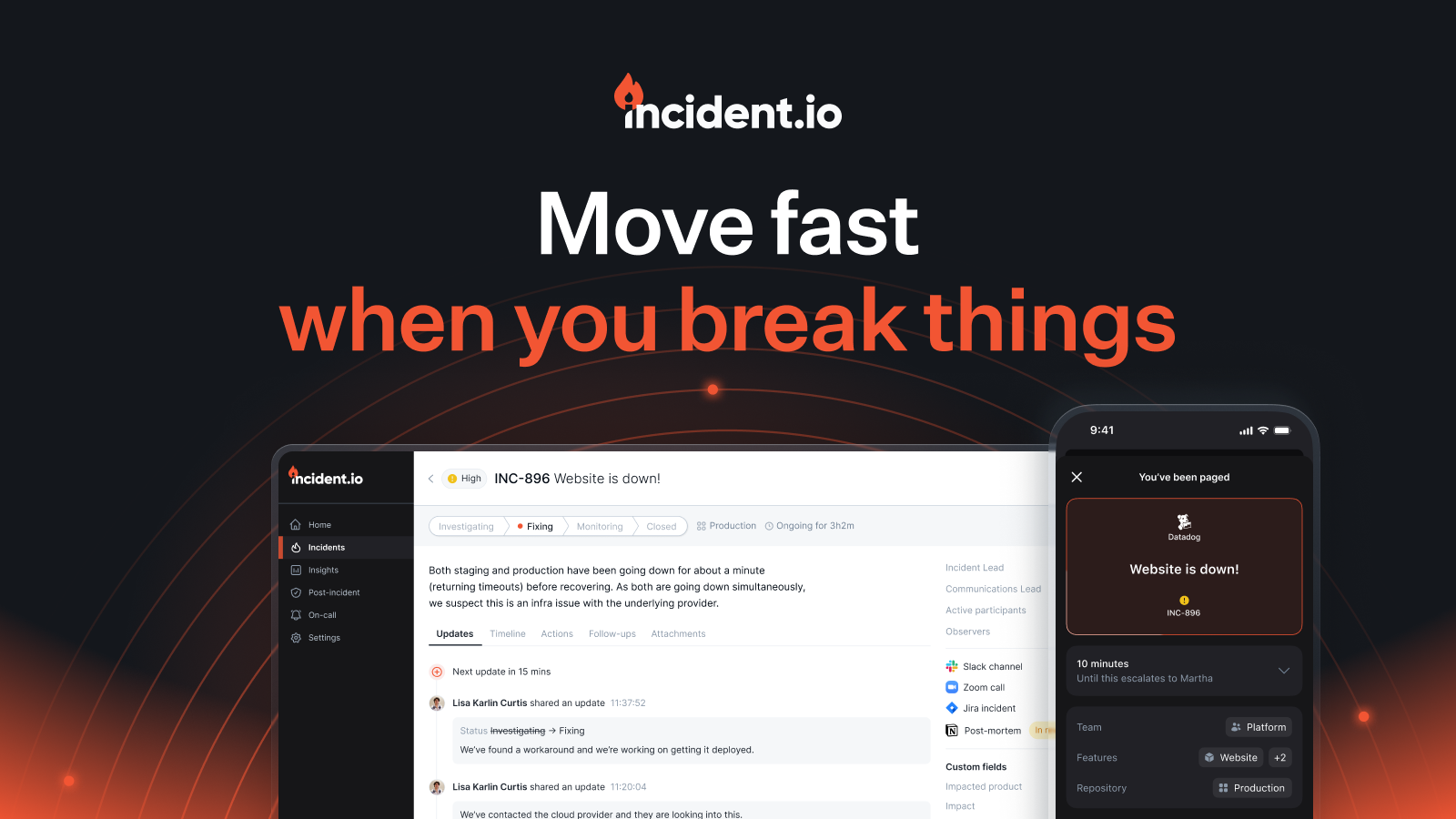
All-in-one incident management platform | incident.io
incident.io is an all-in-one incident management platform unifying on-call scheduling, real-time incident response, and integrated status pages – helping teams resolve issues faster and reduce downtime.
The domain incident.io was registered on March 24, 2018, through namecheap inc and uses Cloudflare for DNS and security. At 7 years old, the domain reflects a mature online presence, offering a proven track record and accumulated authority that contribute to stronger trust signals and SEO benefits, helping the site rank more effectively and attract consistent traffic.
Backlink Profile and Referring Domains
Referring Domains
The backlink profile for incident.io shows a strong presence of high-authority (DA 70+) links from prominent event organizers and tech outlets—multiple links from LF Events/KubeCon and a link from Register—alongside several medium-authority (DA 40-69) referrers, indicating a mix skewed toward authoritative sources like technology publications, developer resources, and industry leaders. This concentration of reputable referring domains materially boosts incident.io’s organic visibility and overall SEO strength by supplying credible endorsements and topical relevance that search engines value.
The sample data indicates an overwhelmingly dofollow-heavy distribution of roughly 100:0 (dofollow:nofollow) among the top links, meaning those high-authority dofollow links are positioned to pass substantial link equity and authority to incident.io. Anchor text is dominated by logo/brand image alt-text and branded anchors—approximately 80% other (logo) anchors, 20% branded (incident.io), 0% naked URLs, and 0% keyword-rich—which is natural for sponsorship/event listings but suggests a need for more diverse, keyword-rich anchors to maximize topical relevance.
Keyword Rankings
Top Ranking Keywords
The domain incident.io demonstrates a tightly focused keyword portfolio that owns first-page positions across brand and product-category terms, combining high commercial intent and varying competition that point to a SaaS incident-management positioning serving both branded searches and broader tool/software queries. The top keyword 'incident io' attracts daily searches in the dozens with a $75.66 CPC, indicating strong commercial value. The other four keywords—incident management software (rank 1, 2,400 SV, $31.58 CPC, 11% competition, low), incident io api (rank 1, 140 SV, $0 CPC, 0% competition, low), incident response management software (rank 1, 390 SV, $38.18 CPC, 41% competition, moderate) and incident management tools (rank 1, 720 SV, $19.36 CPC, 33% competition, low)—show mostly low competition with one moderate-pressure keyword, revealing a market where branded authority and category-level commercial queries coexist and where paid intent is concentrated. The domain's strengths include strong organic visibility, healthy keyword portfolio, competitive SEO performance.
Competitive Landscape
incident.io competes in the incident response and on-call management space against established players like FireHydrant and Rootly, and newer alternatives such as Xurrent and Spike.sh. Compared with more established players, incident.io shows stronger organic traffic patterns (6,823 visits vs competitors' 1,193–6,628) and a visible market presence driven by a clear niche—streamlined, ops-first workflows and fast Slack-native incident orchestration—that have enabled growth despite similar backlink volumes.
The domain's Domain Authority score of 41 sits in parity with direct competitors in the incident response industry, indicating comparable link authority but not a distinguishing SEO advantage. By targeting SREs and engineering teams with automation-first runbooks, Slack-native workflows, and post-incident analytics, incident.io has driven strong word-of-mouth growth, improved organic visibility, and measurable market penetration.
FAQ on incident.io
Everything you need to know about incident.io.
What is incident.io's primary business model?
Incident.io operates a SaaS business model, offering a subscription-based incident management platform for engineering and operations teams. Their product provides tools for incident detection, coordination, runbooks, post-incident reviews, and integrations with collaboration and ticketing systems, with pricing tiers typically based on team size and feature set.
Is incident.io considered a market leader, a challenger, or a niche player?
Incident.io is best characterised as a challenger in the incident management market. It competes by targeting engineering-first teams with modern, collaborative workflows and focuses on differentiated UX and integrations rather than the broad, established footprints of legacy incumbents.
What makes incident.io unique compared to its competitors?
Incident.io is known for its Slack-first, developer-centric approach that tightly integrates incident coordination into existing collaboration workflows, reducing context switching. It emphasises automation, playbooks/runbooks, and lightweight post-incident processes designed for engineering teams, positioning itself as a more modern and developer-friendly alternative to traditional incident management tools.
What are the most recent major updates or strategic shifts seen on incident.io?
Public specifics on very recent updates can be limited, but incident.io’s strategic direction has trended toward deeper automation, richer integrations with tooling like ticketing and observability platforms, and expanding features for post-incident analysis and runbook automation. The company has also been focusing on scaling for larger teams and improving enterprise controls, reflecting broader market trends toward platform consolidation and end-to-end incident lifecycle management.
Related Domains
Explore other domains similar to incident.io.