livekit.io traffic, backlinks, authority, and more
LiveKit.io is a real-time communications platform and open-source SDK provider in the WebRTC and live audio/video industry that offers scalable servers, SDKs, and APIs for developers, product teams, startups, and enterprises building low-latency video, voice, and interactive streaming applications. The site is relatively well-known within developer and RTC communities and is used by engineers and companies seeking self-hosted or managed real-time infrastructure, with estimated daily visits in the hundreds.
Score assigned based on the strength of the domain online
Estimated monthly organic traffic from search engines
Total number of links from other websites pointing to this domain
Traffic Analysis
The site's traffic has grown by 111% year-over-year with over 10,804 monthly visits driven primarily by developer-focused real-time communications solutions — including SDK and Swift integrations, WebRTC testing and realtime API tooling, RPC/realtime call patterns, and emerging voice/AI integration interest. The audience is concentrated in North America (~56.4%, led by the US and Canada), Europe (~31.4%, anchored by Germany, France and the UK), and the Asia‑Pacific region (~9.0%, led by Australia, Japan and Korea), reflecting strong product-market fit in U.S. developer and enterprise markets, solid European adoption, and clear expansion opportunities across APAC for localized SDK and voice/AI offerings.
Domain Preview & WHOIS Information
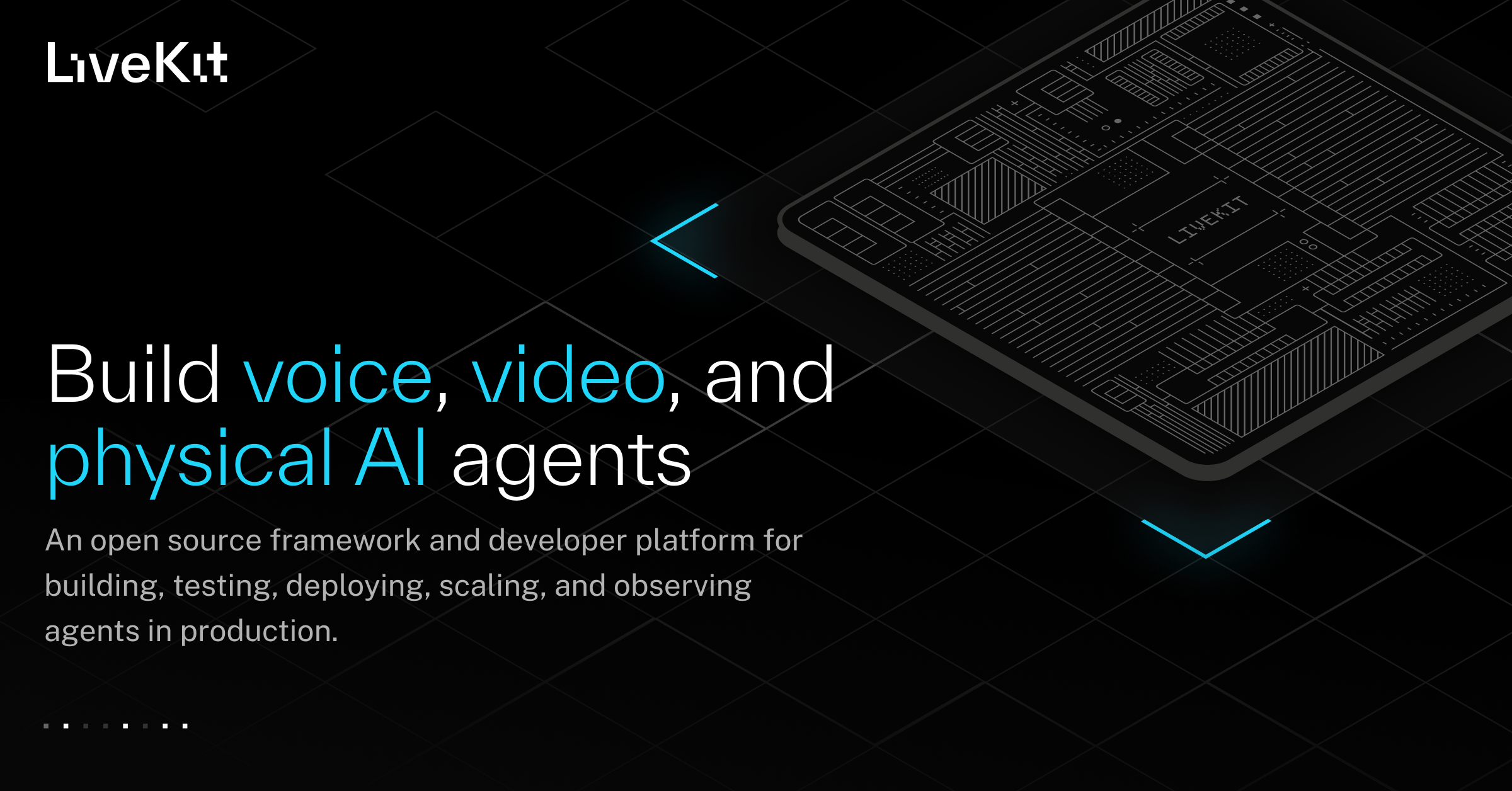
LiveKit | Build voice, video, and physical AI agents
An open source framework and developer platform for building, testing, deploying, scaling, and observing agents in production.
The domain livekit.io was registered on November 3, 2020, through namecheap, inc. and uses Cloudflare for DNS and security. At 5 years old, the domain demonstrates a proven track record and accumulated authority, reflecting a mature online presence that strengthens trust signals and provides tangible SEO benefits.
Backlink Profile and Referring Domains
Referring Domains
The backlink profile for LiveKit shows predominantly medium-authority (DA 40-69) and lower domains with few high-end sources — most top links score in the DA 10-44 range, with no DA 70+ presences, though there are mentions from notable technology publications, developer resources, and industry leaders that lend credibility. This mix of mid-level authority backlinks, combined with a sizable total backlink count and ~3,001 referring domains, supports LiveKit’s organic visibility by providing topical relevance and referral traffic that bolster its overall SEO strength and trust metrics.
The sampled top links show a dofollow-to-nofollow split of 7 dofollow vs 3 nofollow (approximately 70:30), indicating a healthy skew toward links that can pass equity, and dofollow links from the higher-scoring sources in the set help transfer meaningful link authority. Anchor texts are dominated by branded mentions — roughly 70% branded, 10% naked URLs, 10% keyword-rich, and 10% other/author-name anchors, which represents a generally natural profile but suggests continued focus on diversifying keyword-rich anchors could further improve targeted relevance.
Keyword Rankings
Top Ranking Keywords
The domain livekit.io shows a concentrated, high-ranking keyword set focused on product offerings, pricing, documentation, and news that collectively paint a picture of a technical, developer-oriented brand with strong organic placement across intent stages. The top keyword 'livekit news' attracts daily searches in the dozens with a $0 CPC, indicating solid brand recognition. The other keywords—livekit cloud (320 SV, $12.85 CPC, 3% competition), livekit pricing (320 SV, $11.32 CPC, 3% competition), livekit docs (260 SV, $0 CPC, 0% competition), and livekit agent (210 SV, $6.44 CPC, 6% competition)—are all low-competition terms that reveal a niche but willing-to-pay audience (higher CPCs for cloud and pricing) and a market positioning strong among developers and buyers researching implementation and costs. Overall the domain exhibits strong organic visibility, a healthy keyword portfolio, and competitive SEO performance.
Competitive Landscape
livekit.io competes in the real-time video and WebRTC infrastructure space against established players like Twilio, Agora, Vonage, OpenVidu, and newer alternatives such as vapi.ai, pipecat.ai, and voice-mode.readthedocs.io. Compared to the large incumbents, livekit.io shows a focused growth pattern with moderate organic traffic (10,804) that outpaces some niche newcomers in the table but sits below category outliers like vapi.ai (22,069), indicating a solid product-market fit driven by a clear technical niche and developer-first positioning rather than broad enterprise brand reach.
With a Domain Authority score of 41, livekit.io sits on par with direct competitors in the real-time communications/RTC industry, reflecting similar backlink profiles and comparable SEO authority across the set. livekit.io targets developers and startups with low-latency WebRTC primitives, self-hosting options, and flexible SDKs, which has driven organic visibility and developer adoption as evidenced by its higher traffic relative to several peers and a pattern of focused community-driven growth.
FAQ on livekit.io
Everything you need to know about livekit.io.
What is livekit.io's primary business model?
LiveKit operates as a developer-focused real-time communications platform that offers open-source server software alongside a managed cloud service. Customers can self-host the LiveKit server for free under open-source licenses or pay for hosted/managed plans and support, enabling revenue from cloud usage, enterprise features, and professional services.
Is livekit.io considered a market leader, a challenger, or a niche player?
Challenger. LiveKit is widely recognized in developer and startup communities for its open-source, low-latency audio/video infrastructure but does not have the broad enterprise market dominance of larger incumbents; it competes strongly on flexibility, performance, and developer ergonomics.
What makes livekit.io unique compared to its competitors?
LiveKit’s combination of a production-grade open-source SFU, first-class SDKs for multiple platforms, and an optional managed cloud offering differentiates it from competitors that are either closed-source or focused on specific niches. The project emphasizes low-latency WebRTC/WebTransport support, scalability for large rooms, and developer-friendly APIs that make it easy to self-host or integrate into custom workflows.
What are the most recent major updates or strategic shifts seen on livekit.io?
Recent visible trends for LiveKit include continued investment in protocol support (WebTransport and WebRTC optimizations), regular SDK improvements across JavaScript, iOS, and Android, and expansion of its managed cloud offering to simplify production deployments. If no single headline event is cited, the strategic direction is toward improving performance and scalability, broadening platform support, and making self-hosting and managed hosting easier for enterprises and developers.
Related Domains
Explore other domains similar to livekit.io.