readme.com traffic, backlinks, authority, and more
ReadMe.com is a software-as-a-service platform that helps companies create interactive API reference documentation, developer hubs, and product guides, primarily serving developers, technical writers, and product and engineering teams. It is reasonably well-known within the developer tools and API documentation community and used by startups and enterprises to improve developer onboarding and support, with estimated daily visits in the hundreds.
Score assigned based on the strength of the domain online
Estimated monthly organic traffic from search engines
Total number of links from other websites pointing to this domain
Traffic Analysis
The site's traffic has declined by 12% year-over-year with over 5,348 monthly visits driven primarily by developer-focused query intent around API documentation, README generation and tooling, integration/authentication flows, diagramming and in-doc callout usage. Traffic is concentrated in North America (48.4%), followed by Asia‑Pacific (21.7%) and Europe (18.2%), reflecting strong adoption among US-based developer and SaaS teams while meaningful APAC and European interest signals opportunities for localization, enterprise outreach, and product-market fit optimization.
Domain Preview & WHOIS Information
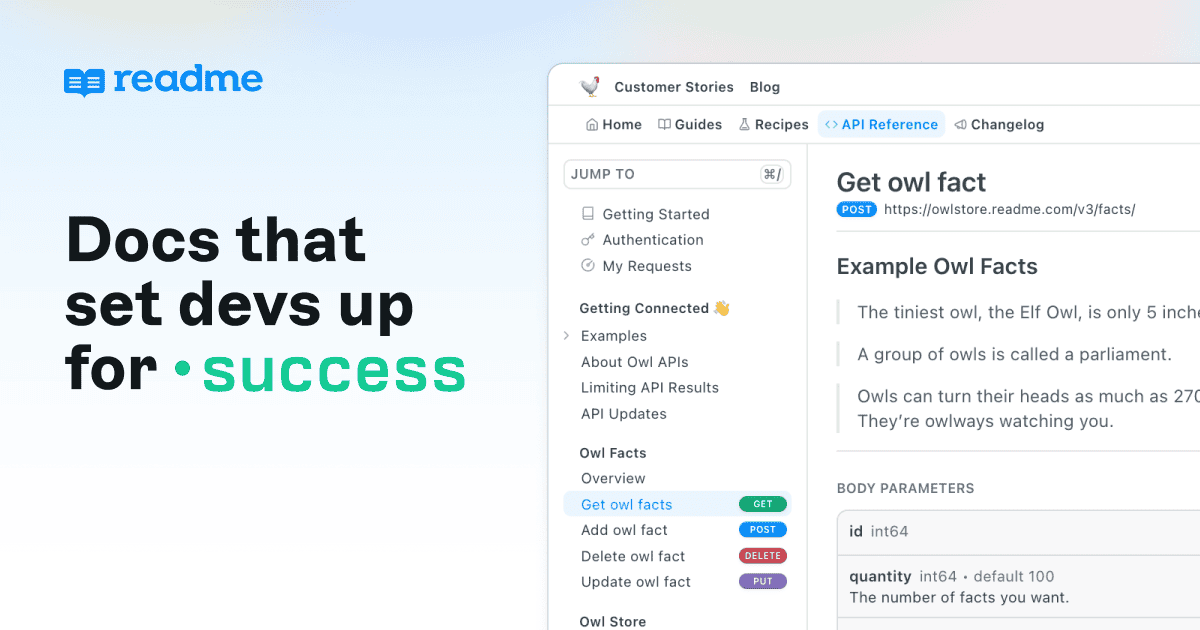
ReadMe
Make your APIs easy to use with clear, powerful API documentation built for developer success.
The domain readme.com was registered on May 30, 1998, through 1api gmbh and uses Cloudflare for DNS and security. At 27 years old, the domain benefits from established credibility, a mature online presence, and accumulated authority that contribute to stronger trust signals, improved SEO potential, and a proven track record that can positively influence search rankings and user trust.
Backlink Profile and Referring Domains
Referring Domains
ReadMe's backlink profile shows predominantly medium-authority (DA 40-69) referring sources in the sample and a domain-level signal of DA 71, but the top links here are mostly from recognized technology publications and developer resources (e.g., GitHub, Medium, OneZero) with few truly high-authority (DA 70+) external placements in the provided list. This mix of substantial referring domains (5,974) and large backlink volume supports ReadMe's visibility and topical relevance, contributing positively to organic search performance and overall SEO strength despite many links coming from lower-DA pages in the sample.
The visible link set in the top backlinks is entirely nofollow in the provided data, yielding an approximate 0:100 dofollow:nofollow distribution, which limits direct link equity flow even though authoritative dofollow links (when present) would pass substantial ranking value. Anchor text is heavily skewed toward naked URLs (90%) with a small portion branded as ReadMe (10%) and keyword-rich (0%), a distribution that is natural for organic citations but signals a need for more diverse, keyword-rich anchors to strengthen relevance signals.
Keyword Rankings
Top Ranking Keywords
The domain readme.com commands a focused keyword portfolio centered on developer documentation, product help and a niche AI brand term, with all tracked keywords ranking in position 1 and showing a mix of technical and consumer intent that points to concentrated SEO positioning and topical authority. The top keyword 'ai readme' attracts daily searches in the dozens with a $0 CPC, indicating solid brand recognition. The other four keywords — 'safari dark mode iphone' (high volume 720, 0% competition) and the documentation-focused terms 'readme documentation' (110, $3.24, 23%), 'readme io' (90, $2.67, 20%) and 'readme docs' (70, $2.29, 25%) — show uniformly low competition (0–33%), revealing easy-to-defend SERP positions and a market positioning that serves both developer audiences and opportunistic consumer queries. Overall the domain demonstrates strong organic visibility and a healthy keyword portfolio.
Competitive Landscape
readme.com competes in the developer API documentation and developer portal space against established players like swagger.io and mermaid.js.org, and newer alternatives such as makeareadme.com and mermaid.ai. Compared with more established players readme.com shows a modest direct traffic footprint (5,348 monthly visits versus swagger.io's 73,361 and mermaid.js.org's 47,297) but has carved out a position by focusing on interactive, productized docs and developer experience, enabling steady adoption among product teams that prefer integrated portals over raw spec tooling.
readme.com's Domain Authority score of 45 sits on par with its listed competitors in the developer documentation industry, meaning its backlink profile and authority signal are comparable even where organic traffic diverges sharply. By targeting product and developer teams with interactive API explorers, customizable developer portals, and self-serve onboarding, readme.com has driven organic visibility and word-of-mouth growth, supporting niche market penetration despite larger incumbents' higher traffic.
FAQ on readme.com
Everything you need to know about readme.com.
What is readme.com's primary business model?
ReadMe operates a SaaS business model, selling subscription plans for its API documentation and developer hub platform to teams and enterprises. It provides hosted documentation, interactive API explorers, analytics, and integration features, with tiered pricing for self-serve and enterprise customers including customization and support.
Is readme.com considered a market leader, a challenger, or a niche player?
ReadMe is best categorized as a challenger. It has strong adoption and recognition in the developer documentation space but competes alongside larger or more entrenched toolsets like Swagger/OpenAPI ecosystems and specialized documentation utilities rather than being the single market leader.
What makes readme.com unique compared to its competitors?
ReadMe emphasizes a developer-first, user-friendly documentation experience with interactive API explorers, versioning, integrated usage analytics, and easy OpenAPI imports. Its focus on customizable developer hubs, on-page “Try It” functionality, and workflow integrations for product and support teams differentiates it from more narrowly focused tools and static documentation templates.
What are the most recent major updates or strategic shifts seen on readme.com?
Publicly available specifics on the very latest releases may vary, but ReadMe’s recent strategic direction has emphasized improving developer experience, deeper OpenAPI and integration support, expanded analytics and enterprise-grade features, and easier self-serve onboarding. The company appears to follow industry trends toward richer interactive docs, tighter platform integrations, and stronger support for teams managing API lifecycles.
Related Domains
Explore other domains similar to readme.com.