readme.io traffic, backlinks, authority, and more
Readme.io is a SaaS company that provides developer-focused documentation and API reference tools, helping engineering and product teams, technical writers, and businesses create interactive docs, changelogs, and developer portals. The site is well-known within developer and API communities and used by startups and enterprises for public-facing docs and internal knowledge bases, with estimated daily visits in the hundreds.
Score assigned based on the strength of the domain online
Estimated monthly organic traffic from search engines
Total number of links from other websites pointing to this domain
Traffic Analysis
The site's traffic has declined by 23% year-over-year with over 8,165 monthly visits driven primarily by niche developer and integration queries, entertainment and adult-oriented content searches, and various productivity and HR/login related terms. Geographically, traffic is concentrated in Asia-Pacific (led by India, 35.6%), Europe (led by France, 12.2%) and Latin America (led by Peru, 9.8%), indicating strong adoption in emerging APAC markets, solid European technical-user interest, and notable penetration in Latin American markets that align with the domain’s SaaS documentation and developer-focused offerings.
Domain Preview & WHOIS Information
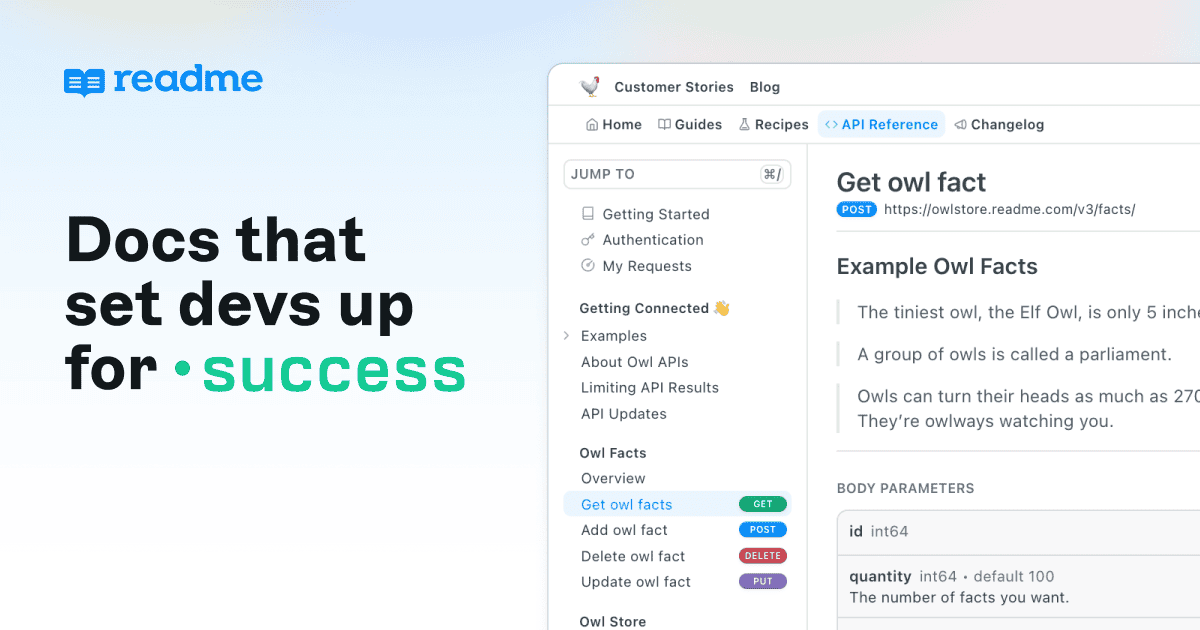
ReadMe
Make your APIs easy to use with clear, powerful API documentation built for developer success.
The domain readme.io was registered on May 17, 2011, through 1api gmbh and uses Cloudflare for DNS and security. At 14 years old, the domain benefits from established credibility, a mature online presence, a proven track record, and accumulated authority—factors that contribute to stronger trust signals, improved SEO potential, and greater domain authority in search rankings.
Backlink Profile and Referring Domains
Backlinks
Referring Domains
The backlink profile for ReadMe shows a preponderance of DA 40-69 (medium-authority) links with several lower-authority sources below DA 40 (low-authority); notable referring sites are developer resources like GitHub and technology publications such as Medium and niche tech blogs rather than DA 70+ (high-authority) industry leaders. This distribution provides steady topical relevance and domain signals that support ReadMe’s organic visibility, contributing to a moderate SEO strength by reinforcing product relevance within developer and tech contexts.
The sample link set has 1 dofollow and 9 nofollow links, an approximate 10:90 dofollow:nofollow split, so equity is primarily carried by the limited dofollow placements (the single dofollow comes from a DA 51 source and thus transfers meaningful link equity despite being scarce). Anchor texts are overwhelmingly branded — roughly branded 90%, naked URLs 0%, keyword-rich 0%, and other 10%, which is a natural/healthy signal for brand-focused citation but indicates opportunities to diversify with more descriptive keyword-rich anchors and additional dofollow links from higher-authority sources to strengthen referral equity.
Keyword Rankings
Top Ranking Keywords
The domain readme.io presents a mixed keyword portfolio spanning developer libraries, security tools, asset management, niche consumer hardware, and small low-competition utilities, reflecting focused technical documentation and support content with varied commercial intent. The top keyword 'resilience4j' attracts daily searches in the dozens with a $1.69 CPC, indicating solid developer recognition. The other keywords show divergent competitiveness: starlink cable routing kit has high competition (91%) despite mid search volume and low CPC, snipe it sits in moderate competition (39%) with high volume and a $8.21 CPC, spyse is moderately competitive (49%) with niche security interest and a $6.19 CPC, and undressify is effectively low-competition (2%) with modest volume and a $0.31 CPC, revealing a mix of commercial and low-effort informational targets. The domain's strengths are clear in its healthy keyword portfolio and competitive SEO performance driven by targeted technical queries and select high-CPC opportunities.
Competitive Landscape
readme.io competes in the API documentation and developer experience space against established players like Swagger / OpenAPI, Confluence, Read the Docs, and newer alternatives such as Postman, Stoplight, and Docusaurus. Compared to these more established players, readme.io shows a niche-focused positioning with relatively modest organic traffic but a disproportionately large backlink footprint and concentrated developer-centric product marketing that drives steady, developer community-driven adoption rather than mass-market traffic spikes.
With a Domain Authority score of 47 in the API documentation and developer experience industry, readme.io sits on par with several high-DA domains but underperforms them on raw organic sessions, indicating DA parity but lower overall visibility and reach versus larger brands. By targeting developer teams with features like interactive API explorers, versioned docs, and customizable portals, readme.io leverages developer-first UX, integrated API testing, and community-driven growth to fuel strong word-of-mouth growth and improved organic penetration in niche segments.
FAQ on readme.io
Everything you need to know about readme.io.
What is readme.io's primary business model?
ReadMe operates a SaaS business model, selling subscriptions to its documentation and developer hub platform that helps companies publish and manage API reference, guides, and interactive docs. Revenue comes from tiered plans including team and enterprise offerings, often with professional services or custom integrations for larger customers.
Is readme.io considered a market leader, a challenger, or a niche player?
Challenger. ReadMe is a well-known and growing provider in the developer documentation and API experience space but competes with several established tooling options and open-source projects, positioning it as a strong challenger rather than the dominant market leader.
What makes readme.io unique compared to its competitors?
ReadMe emphasizes a polished developer experience with integrated interactive API explorers, easy OpenAPI/Swagger imports, versioning, and guides alongside analytics to monitor doc usage. Its focus on making documentation productized—combining docs, tutorials, and customer-centric features like user-specific content and API keys—differentiates it from more generic documentation hosts and some open-source alternatives.
What are the most recent major updates or strategic shifts seen on readme.io?
Recent public developments have focused on expanding the platform’s developer-experience capabilities and enterprise readiness, including richer analytics, improved onboarding and customization features, and tighter integrations with API toolchains. If specific product releases are not publicly detailed, the observable strategic direction is towards deeper developer portal functionality, enhanced analytics, and features aimed at larger customers and teams.
Related Domains
Explore other domains similar to readme.io.