zenml.io traffic, backlinks, authority, and more
ZenML is an open-source MLOps framework and pipeline orchestration tool in the machine learning industry that helps data scientists and ML engineers build reproducible, production-ready ML pipelines and integrate with tools like TensorFlow, PyTorch, and cloud CI/CD systems. It is moderately recognized within the ML engineering community and among developers who adopt open-source MLOps tools, with estimated daily visits in the dozens.
Score assigned based on the strength of the domain online
Estimated monthly organic traffic from search engines
Total number of links from other websites pointing to this domain
Traffic Analysis
The site's traffic has grown by 106% year-over-year with over 1,836 monthly visits driven primarily by comparative research and evaluation activity around workflow and orchestration platforms, vector and retrieval-augmented architectures, prompt validation and testing tools, competitor and alternatives discovery for LLM copilots and related privacy/masking solutions, and broader interest in integration and evaluation tooling that informs purchasing and implementation decisions. Geographically the audience is concentrated in North America (55.8%), followed by Europe (26.0%) and Asia‑Pacific (16.8%), reflecting a strong presence in the platform and cloud-first US market with meaningful enterprise adoption and growing demand across European and APAC markets that align with the domain’s target markets and industry use cases.
Domain Preview & WHOIS Information
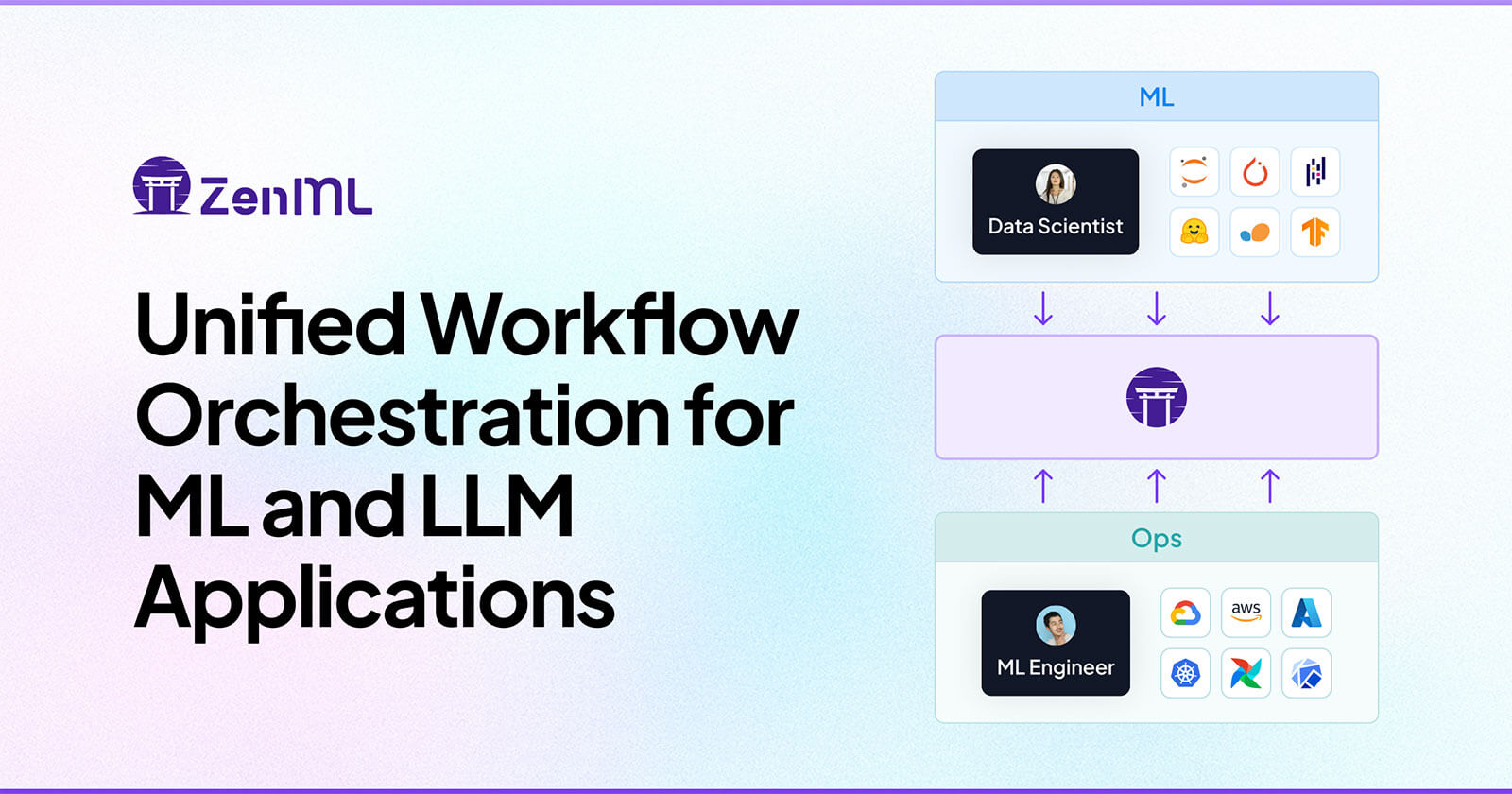
ZenML — The AI Control Plane
One layer for orchestration, versioning, and governance — from training pipelines to agent evals, local to Kubernetes.
The domain zenml.io was registered on November 16, 2020, through gandi sas and uses Cloudflare for DNS and security. At 5 years old, the domain benefits from mature online presence, proven track record, and accumulated authority, which can contribute to stronger trust signals, better SEO performance, and increased credibility with users and search engines.
Backlink Profile and Referring Domains
Referring Domains
ZenML's backlink profile is dominated by lower to mid-level authority sources, with most referring domains scoring in the below 40 range (multiple DA 8-9 entries from open source platforms and one DA 37 mention from a medium-authority piece); there are no clear high-authority (DA 70+) domains in the top links, though the profile does include notable source types like open source platforms, developer resources, and a mention in a technology publication-style post. This distribution gives ZenML a modest organic foothold — the volume of links (11,502 total backlinks from 1,182 referring domains) helps visibility, but the predominance of lower-authority links limits the site’s ability to capture stronger search rankings and overall SEO strength compared with competitors with more high-authority endorsements.
The backlink set in the sample shows an overwhelmingly dofollow-heavy composition: 10 dofollow links versus 1 nofollow, roughly an approximately 91:9 dofollow:nofollow ratio, meaning the dofollow links (even from mid/low-DA sources) largely pass link equity back to ZenML. Anchor text is heavily weighted toward naked domain anchors like "zenml.io" (~91%), with branded anchors like "ZenML" at about 9%, and virtually 0% keyword-rich anchors, a distribution that appears natural for an open-source developer ecosystem but would benefit from a gradual increase in diverse, context-rich keyword anchors from higher-authority sites.
Keyword Rankings
Top Ranking Keywords
The domain zenml.io offers a concentrated keyword portfolio focused on automation, observability alternatives, and vector database/RAG infrastructure, with rankings that show niche technical intent and a mix of high-value and low-competition targets reflecting a specialized SEO positioning. The top keyword 'n8n vs langflow' attracts daily searches in the dozens with a $12.33 CPC, indicating moderate market presence. The other keywords — **"datadog alternative" (SV 210, CPC $21.15, competition 74% - high competition), **"top vector database solutions" (SV 210, CPC $0, competition 0% - low competition), **"best vector database" (SV 390, CPC $5.65, competition 53% - moderate competition), and "vector db for rag" (SV 170, CPC $4.90, competition 67% - high competition) — show the site competes in both highly commercial, competitive enterprise search (Datadog alternatives) and low-competition informational long-tail vector/RAG queries, revealing a balanced approach toward enterprise buyers and technical researchers. The domain's strengths are its healthy keyword portfolio, strong organic visibility in technical niche topics, and competitive SEO performance across both high-value and low-competition opportunities.
Competitive Landscape
zenml.io competes in the machine learning infrastructure and MLOps space against established players like MLflow, Kubeflow, SageMaker and newer alternatives such as Qdrant (qdrant.tech), TrueFoundry (truefoundry.com), LangFlow (langflow.org) and Dynamiq (getdynamiq.ai). Compared to those more established and higher-traffic incumbents, zenml.io shows a modest presence with lower organic traffic but a clear niche focus on reproducible pipelines and developer ergonomics that drives concentrated, technical audience engagement rather than broad market visibility.
The domain’s Domain Authority score of 30 places it on par with direct competitors in the MLOps/ML infrastructure industry, since peers in the provided set report identical DA values even as their organic traffic diverges significantly. By targeting ML engineers with developer-first pipelines, reproducibility, open-source community and deep integrations, zenml.io has generated strong word-of-mouth growth and organic visibility, though this has so far translated into more niche market penetration compared with higher-traffic alternatives.
FAQ on zenml.io
Everything you need to know about zenml.io.
What is zenml.io's primary business model?
ZenML operates on an open-source core model supplemented by commercial offerings: the project provides a free community edition for building reproducible ML pipelines and generates revenue through enterprise features, professional support, training, and hosted/cloud services aimed at organizations that need additional governance, security, or managed operations.
Is zenml.io considered a market leader, a challenger, or a niche player?
Challenger. ZenML is a recognized contender in the MLOps space—well-regarded for its pipeline-first approach and integrations—but it competes with larger, more established platforms and specialized vendors, positioning it as a growing challenger rather than the overall market leader or a narrowly focused niche player.
What makes zenml.io unique compared to its competitors?
ZenML emphasizes a pipeline-centric, reproducibility-first design with a modular "stack" concept that makes it easy to swap components (orchestrators, artifact stores, metadata stores) and integrate with many third-party tools. Its combination of an extensible plugin architecture, strong local-development ergonomics, and a clear path from open-source to enterprise-managed deployments differentiates it from single-focus vector databases or workflow-only tools.
What are the most recent major updates or strategic shifts seen on zenml.io?
Recently ZenML has continued expanding integrations and connectors to popular orchestration engines, artifact stores, and feature/model stores while maturing enterprise capabilities and managed/cloud deployment options to address production needs. Where specific release details vary over time, the observable strategic direction emphasizes broader ecosystem interoperability, improved governance/observability for production pipelines, and commercialization through enterprise and hosted services.
Related Domains
Explore other domains similar to zenml.io.