mixpanel.com traffic, backlinks, authority, and more
Mixpanel.com is a product analytics company offering event-based analytics and user behavior tracking tools for product managers, marketers, and engineers at startups and enterprises. The site is well-known within the tech and product communities for its real-time cohort analysis and funnel reporting, maintaining solid recognition among its targeted users with estimated daily visits in the hundreds.
Score assigned based on the strength of the domain online
Estimated monthly organic traffic from search engines
Total number of links from other websites pointing to this domain
Traffic Analysis
The site's traffic has grown by 11% year-over-year with over 19,609 monthly visits driven primarily by product and marketing analytics demand — including funnel and event measurement, session replay and real-time mobile analytics, custom property instrumentation and experimentation capabilities. The audience is concentrated in North America (driven by the US and Canada) at ~37.8%, Asia (led by strong adoption in India and broader APAC markets) at ~31.7%, and Europe (with the UK and Western European markets) at ~18.5%, reflecting a core focus on tech, SaaS and mobile-first companies in those target markets.
Domain Preview & WHOIS Information
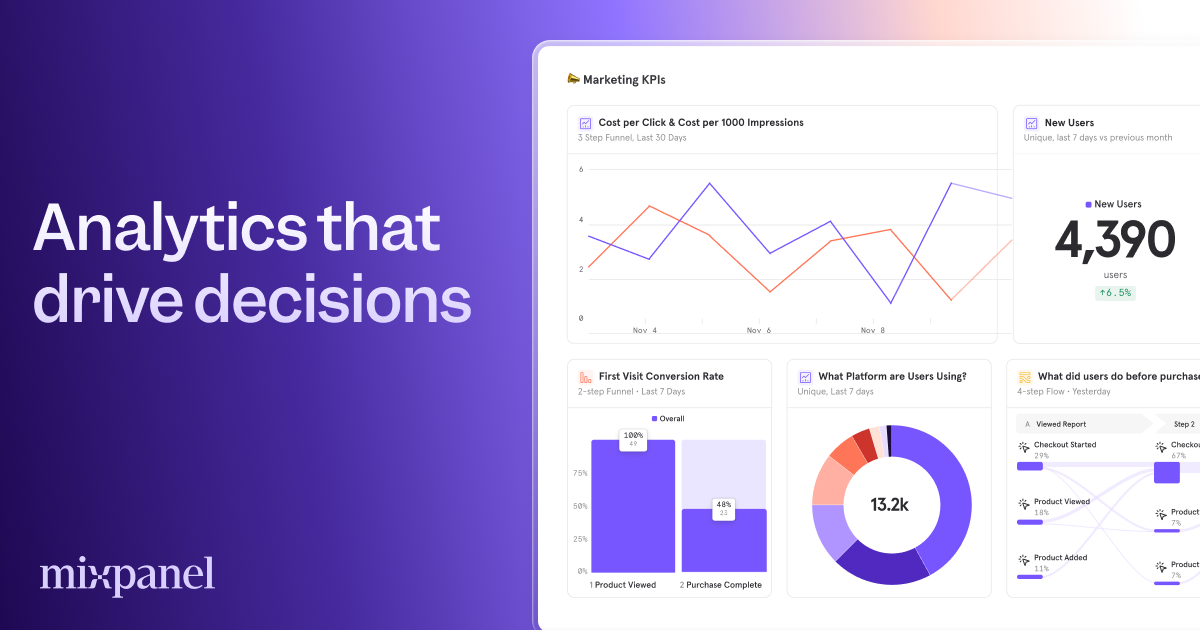
Product Analytics & Robust Event Tracking | Mixpanel
Get a complete view of your customers with Mixpanel digital analytics. Track, analyze, and act on user behavior to drive acquisition, growth, and retention.
The domain mixpanel.com was registered on March 13, 2007, through squarespace domains ii llc and uses Google Cloud for DNS and security. At 18 years old, the domain benefits from established credibility, a mature online presence, a proven track record, and accumulated authority that typically translate into stronger trust signals, better SEO performance, and enduring brand recognition.
Backlink Profile and Referring Domains
Referring Domains
Mixpanel's backlink profile shows a strong presence of medium-authority (DA 40-69) referring domains alongside the site's own DA 70+, with prominent placements coming from developer resources (multiple GitHub repos), technology publications and industry leaders like Hacker News and Steve Blank-style startup tool lists. This mix of sources, combined with a substantial footprint (over 5.3M backlinks and ~41.8K referring domains), bolsters Mixpanel's organic visibility and provides a resilient SEO strength foundation by signaling relevance across technical and industry-focused contexts.
The sample link set has a dofollow-to-nofollow split of approximately 30:70, indicating a higher proportion of nofollow links but still meaningful dofollow signals from medium-authority sites that can pass link equity and support rankings. Anchor text is dominated by branded anchors (~50%), naked URLs (~30%), keyword-rich anchors (~0%), and other/unique anchors (~20%), which is a generally natural distribution emphasizing brand recognition while showing limited commercial keyword targeting that appears healthy from a risk perspective.
Keyword Rankings
Top Ranking Keywords
The domain mixpanel.com has a concentrated keyword portfolio focused on product information, user access, hiring and support, with high-ranking branded and transactional queries such as mixpanel news (2,900 SV), mixpanel pricing (880 SV, $12.62 CPC, 33% competition), mixpanel careers (590 SV), mixpanel login (480 SV) and support engineer mixpanel (480 SV), reflecting a strong UX/product analytics positioning and clear audience targeting across marketing, sales and recruiting.
The top keyword 'mixpanel news' attracts daily searches in the dozens with a $0 CPC, indicating solid brand recognition.
The other high-ranking keywords — mixpanel pricing (880 SV, $12.62 CPC, 33% competition), mixpanel careers (590 SV, 0% competition), mixpanel login (480 SV, 0% competition) and support engineer mixpanel (480 SV, 0% competition) — show mixed competitiveness: pricing carries low-to-moderate commercial competition suggesting monetization opportunity, while the career/login/support terms are low-competition, signaling strong owned presence and niche recruitment/support visibility.
Overall the domain demonstrates strong organic visibility, a healthy keyword portfolio, and competitive SEO performance.
Technology Stack
 Amazon S3
mixpanel.com is built on a modern frontend stack that includes React, Vue, jQuery, and Next.js, combining component-driven UI development with server-rendering-capable frameworks to improve runtime performance and developer experience; this mix enables server-side rendering and modular development patterns that help with maintainability and optimal SEO. On the backend and delivery side the site leverages Cloudflare, Amazon S3, Google Cloud, and nginx to provide a CDN-backed, reliably hosted architecture that supports global distribution, scalability, and efficient static asset delivery and caching at the edge.
The security and DNS layer uses reCAPTCHA, HSTS, Okta, and DigiCert SSL to protect against automated abuse, enforce HTTPS, provide identity management, and secure connections—together these measures strengthen DNS management, DDoS mitigation, and ensure fast load times across geographic regions through secure content delivery. For analytics and developer tooling the site employs Google Analytics, Google Tag Manager, Hotjar, and Mixpanel to monitor user behavior, manage tags without code changes, collect qualitative feedback, and optimize funnels; complementary practices such as adopting type safety with TypeScript, efficient data fetching via GraphQL, or modern CSS solutions can further enhance developer productivity and user experience if incorporated.
Competitive Landscape
mixpanel.com competes in the product analytics and event-based analytics space against established players like Amplitude, Heap, PostHog, and newer alternatives such as UXCam. Compared to more established players, Mixpanel shows a mid-level traffic footprint (≈19.6k organic visits) versus leaders like Amplitude (≈77.7k) and Heap (≈45.8k), indicating solid market presence but trailing top competitors; its focused positioning around product analytics and event-driven segmentation has carved a niche with product teams that fuels steady adoption despite lower overall traffic.
mixpanel.com has a Domain Authority of 45, which sits on par with competing domains in the product analytics industry (all listed competitors report the same DA), suggesting equal starting credibility in search versus peers. By targeting product managers and growth teams with real-time event tracking, advanced cohorting, and self-serve analytics, Mixpanel leverages product-led growth and organic visibility to drive adoption and market penetration among data-driven product teams.
FAQ on mixpanel.com
Everything you need to know about mixpanel.com.
What is mixpanel.com's primary business model?
Mixpanel operates on a software-as-a-service (SaaS) model, selling subscriptions to its product analytics platform with tiered pricing based on event volume and feature set. It offers a free tier for smaller projects and paid plans for growth and enterprise customers, with add‑ons for advanced features and data export/integration capabilities.
Is mixpanel.com considered a market leader, a challenger, or a niche player?
Market leader. Mixpanel is widely recognized as one of the leading vendors in product and behavioral analytics alongside competitors like Amplitude, serving a broad set of customers from startups to large enterprises and maintaining significant market presence and mindshare.
What makes mixpanel.com unique compared to its competitors?
Mixpanel emphasizes event-based, user-centric analytics with powerful cohorting, funnel, and retention analysis that makes it easy to track individual user behavior and lifecycle metrics. It combines real-time querying, a relatively approachable self-serve interface, and integrations for exporting data to data warehouses, positioning it as a practical tool for product teams focused on behavioral insights.
What are the most recent major updates or strategic shifts seen on mixpanel.com?
In recent years Mixpanel has focused on strengthening integrations with data warehouses and third‑party tools, improving SDKs and real‑time analytics, and adding predictive and automated insights to help teams act on behavioral signals. The company has also emphasized scalability, enterprise features (governance and security), and support for first‑party data strategies in response to privacy changes and market demand.